A medium-format SLR uses a film frame or digital imaging area larger than 35mm full frame. That larger format can produce wider detail, smoother tonal transitions, and shallower depth of field at an equivalent framing—but it does not automatically produce more megapixels.
The key distinction is simple: sensor size describes the physical imaging area, while megapixels describe how many pixels record the image. Film medium format has no digital sensor or megapixel count, but its frame dimensions can still be compared with digital formats.
What Makes a Medium-Format SLR Camera?
SLR means single-lens reflex. A mirror reflects light from the taking lens into an optical viewfinder, then swings out of the way during exposure. In a film medium-format SLR, the image is recorded on a roll-film frame rather than on a 35mm film frame.
Common film formats include 6×4.5cm, 6×6cm, and 6×7cm. Their actual image areas are smaller than those names suggest because of film margins and frame spacing, but they remain substantially larger than a 36×24mm full-frame image. A larger frame can capture more subject detail with the same film stock and lens quality, while 6×6 also produces a square composition without cropping.
Modern digital medium format uses sensors commonly around 44×33mm or larger. Some digital systems use an SLR-style body, while others are mirrorless or pair a digital back with a modular camera. The “medium format” label refers primarily to the imaging area, not to whether the camera has a reflex mirror.
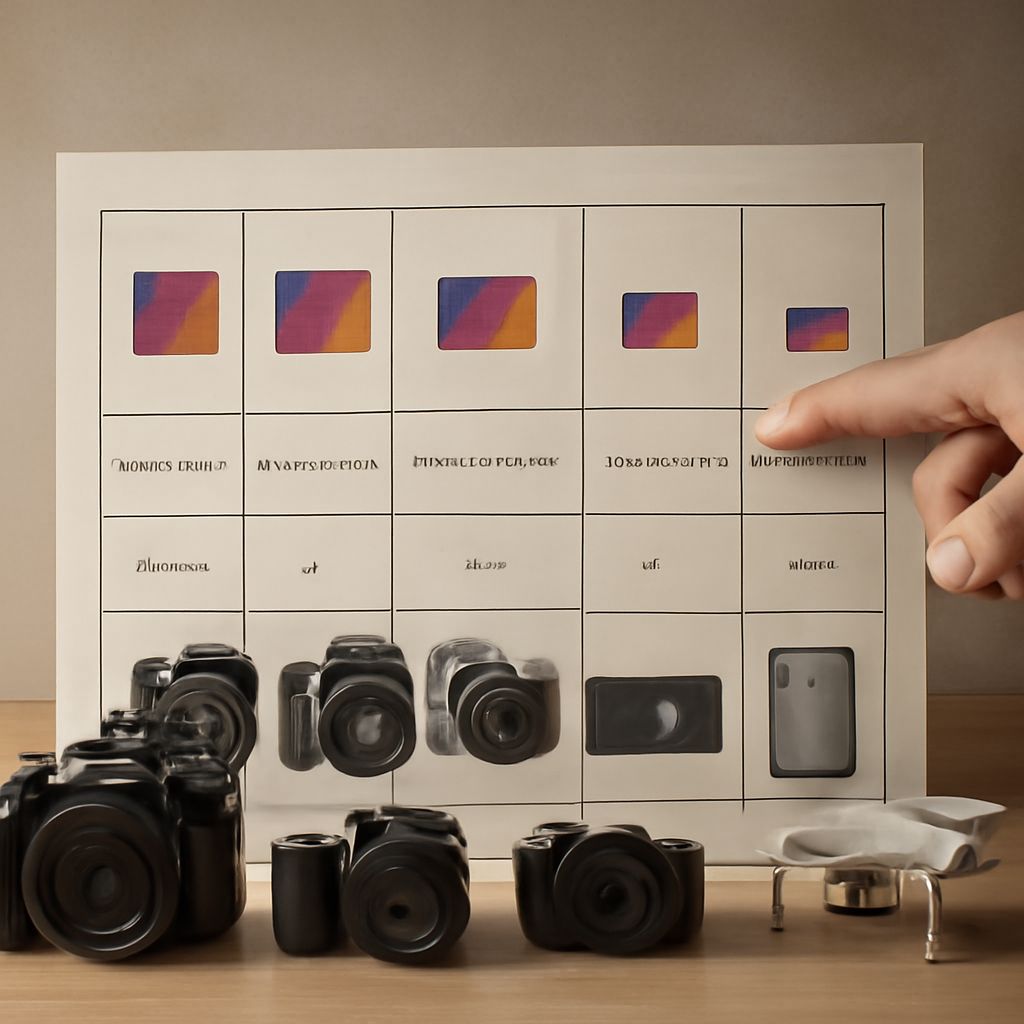
Camera Sensor-Size Comparison: APS-C, Full Frame, and Medium Format
This camera sensor-size chart uses representative dimensions. Exact measurements vary by manufacturer and system.
- APS-C: about 23.5×15.6mm, or 367 square millimetres.
- Full frame: 36×24mm, or 864 square millimetres.
- Digital medium format: about 44×33mm, or 1,452 square millimetres—roughly 1.7 times the area of full frame.
- Larger digital or 645-style medium format: about 54×40mm, or 2,160 square millimetres.
- Film 6×4.5: approximately 56×41.5mm of image area.
- Film 6×6: approximately 56×56mm of image area.
- Film 6×7: approximately 56×70mm of image area.
Film dimensions describe the exposed frame, not a sensor. Digital dimensions describe the active sensor area. Larger areas generally allow a wider field of view for a given focal length and can produce shallower depth of field at the same framing, provided the lens and aperture are comparable.
What Megapixels Measure—and What They Do Not
Megapixels explained simply: one megapixel equals one million image pixels. A 6,000×4,000-pixel file contains 24 million pixels, or 24 megapixels. Pixel count indicates the amount of sampled image data, not the physical size of the sensor capturing it.
A 24MP APS-C camera and a 24MP full-frame camera can record the same pixel dimensions. The full-frame model spreads those pixels across a larger area, usually creating larger individual pixels. A 50MP medium-format camera has both a larger sensor and a higher pixel count, but those are separate specifications.
More megapixels can preserve finer detail, support larger prints, and allow heavier cropping. At 300 pixels per inch, a 24MP file measuring 6,000×4,000 pixels produces a roughly 20×13-inch print; a 50MP file measuring about 8,256×5,504 pixels produces roughly 27.5×18 inches.
Megapixels do not guarantee sharpness, low noise, or image quality. Lens resolution, focus accuracy, camera movement, atmospheric conditions, demosaicing, and sharpening all limit visible detail. High pixel density can also reveal blur and diffraction more readily.
Format and Resolution Trade-Offs in Real Shooting
Choose the format according to the subject and output rather than megapixels alone. Medium format is particularly useful for controlled portraits, landscapes, studio work, and large prints where tonal subtlety, cropping latitude, and fine texture matter. Its larger bodies, lenses, storage demands, and slower handling can be disadvantages for action, travel, or fast-changing scenes.
Full frame offers a broad balance of resolution, lens choice, low-light performance, and portability. APS-C systems are often smaller and provide plenty of detail for editorial, web, and moderate-size prints. A high-quality lens on either format can outperform a higher-megapixel camera used with poor focus or motion blur.
For the sharpest result from any high-resolution body, use an appropriate shutter speed, precise focus, a stable support when needed, and lenses capable of resolving the sensor. Sensor area shapes the look and light-gathering behavior; megapixels determine how finely the captured image is sampled.