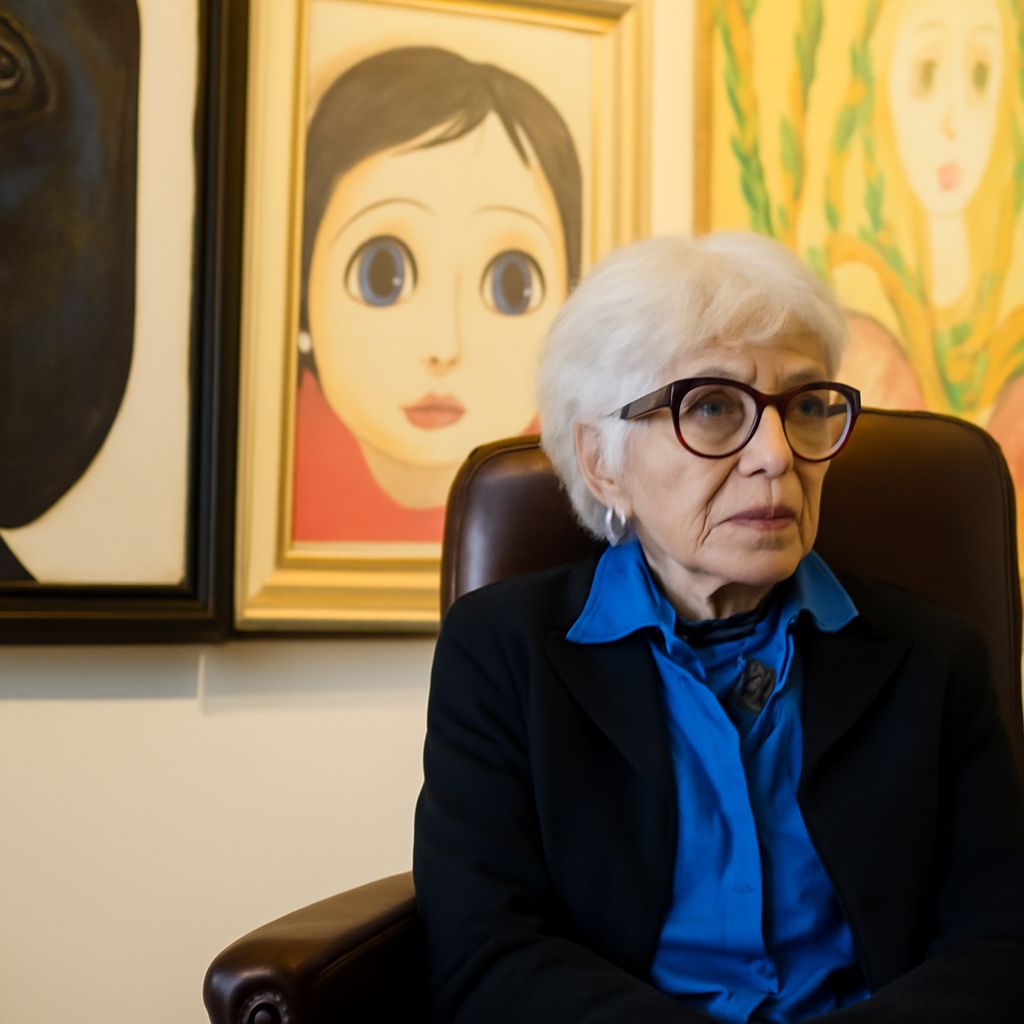
Margaret Keane, a name often synonymous with the unique and captivating “Big Eyes” paintings, has carved a distinct niche in the world of art with her instantly recognizable style. Her works, primarily focusing on figures with exaggeratedly large eyes, evoke a sense of innocence and melancholy that has intrigued art lovers for decades. Let’s delve into the fascinating artistic journey of Margaret Keane and the enduring impact of her “Big Eyes” on visual culture.
Margaret Keane: An Introduction to Her Artistic Journey
Born in 1927 in Nashville, Tennessee, Margaret Keane displayed an artistic talent from a young age. Her formal art education began at Traphagen School of Design in New York City. Although her early work included a variety of subjects, it was not until the 1950s that Keane developed her signature style—the “Big Eyes”—which would become a hallmark of her career.
Keane’s career was not without challenges. During the early years, her then-husband Walter Keane took credit for her work, leading to a complex legal battle that ultimately saw her recognized as the true artist behind the famous paintings. Despite these personal trials, Margaret Keane’s passion for art never wavered, and she continued to develop her craft well into her later years.
The Emergence and Significance of ‘Big Eyes’
The “Big Eyes” style, characterized by figures with disproportionately large eyes, became a sensation in the art world during the 1960s. The eyes, often described as ‘windows to the soul,’ were meant to convey deep emotion and vulnerability. This style resonated with audiences, as it diverged from traditional portraiture by emphasizing emotional expression over realistic representation.
Keane’s paintings often featured wide-eyed children, animals, and women, each with a distinct narrative quality. The appeal of these works was not only their emotive power but also the way they captured a universal sense of longing and innocence. Collectors and the general public alike were drawn to these evocative images, propelling Margaret Keane into the limelight.
Influence on Visual Culture and Portrait Studies
Margaret Keane’s “Big Eyes” has had a lasting influence on visual culture, inspiring numerous artists and the broader field of portrait studies. Her work challenged traditional notions of portraiture by shifting the focus from physical likeness to emotional depth. This emphasis on emotional resonance paved the way for more expressive and interpretive approaches in modern art.
Beyond the realm of fine art, Keane’s influence can be seen in various media, including films, fashion, and graphic design. Her distinctive style has permeated popular culture, influencing everything from animated characters to fashion photography, thereby cementing her legacy as a pioneer of a unique artistic vision.
Margaret Keane’s Legacy in Modern Art
Margaret Keane’s impact on modern art is profound and enduring. Her work not only challenged the boundaries of traditional portraiture but also established a new paradigm for emotional expression in art. The legal battle for her rightful recognition as the creator of “Big Eyes” also highlighted the broader issues of artistic authorship and the value of individual expression.
Keane’s story and her distinctive artwork have continued to inspire new generations of artists. Her resilience and dedication to her craft serve as a testament to the power of authenticity in the art world. Today, Keane’s paintings are celebrated not only for their unique aesthetic but also for their contribution to the evolution of contemporary art.
As we reflect on Margaret Keane’s legacy, it’s clear that her “Big Eyes” are more than just a style; they represent a profound exploration of human emotion and identity, ensuring her place as a significant figure in the art world.