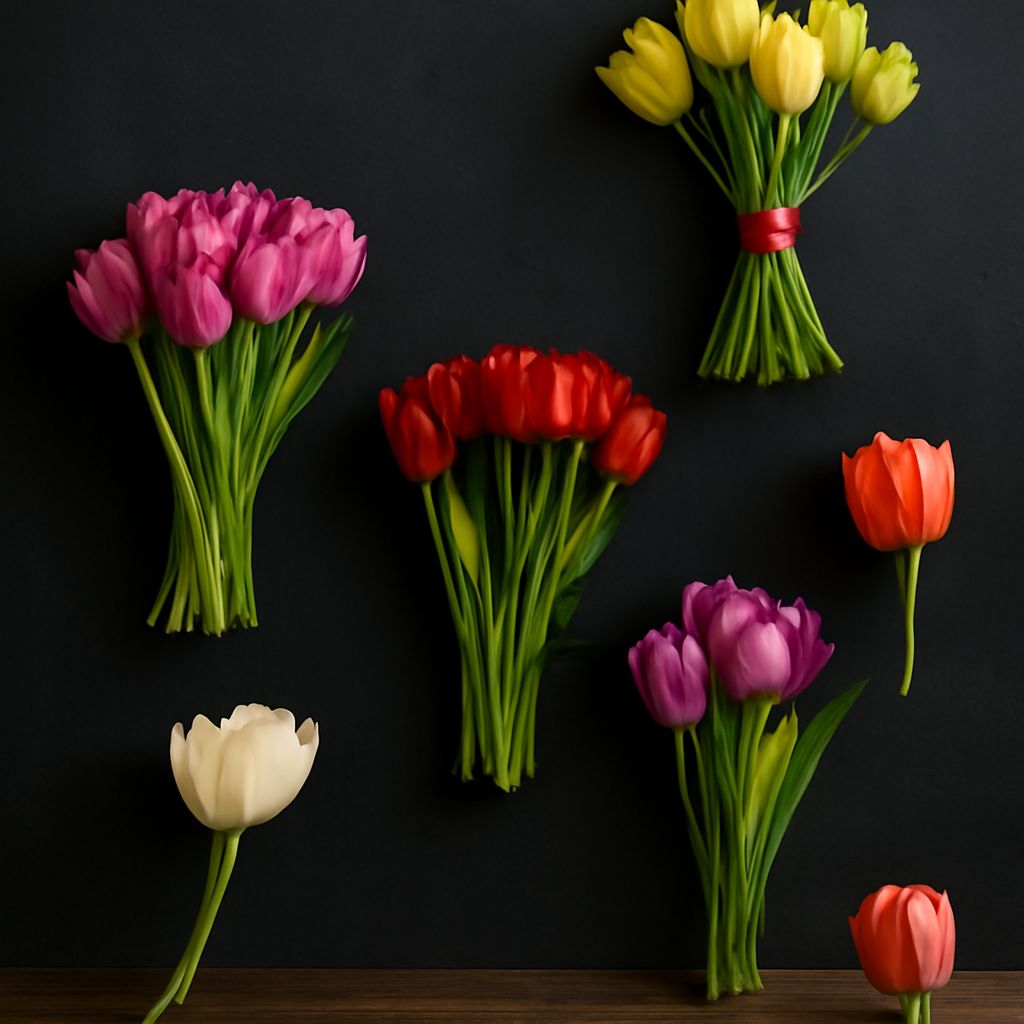
Tulips, with their vibrant colors and elegant form, have been captivating admirers for centuries. But what do tulips represent in terms of symbolism and meaning? Often associated with perfect love, tulips carry diverse interpretations across cultures and color variants. While generally symbolizing rebirth and charity, these flowers also possess unique cultural significance. Let’s delve deeper into the fascinating symbolism of tulips, explore what tulips mean in different contexts, and uncover the distinctive meaning of blue tulips.
Historical Symbolism of Tulips
The history of tulips as a symbol dates back to the Ottoman Empire, where they were seen as a sign of wealth and prosperity. Introduced to Western Europe in the 16th century, tulips quickly became a luxury item, particularly during the Dutch “Tulip Mania” of the 1630s. This period saw the flower epitomize economic speculation and excess, but also beauty and rarity. Historically, tulips have represented paradise on earth, a notion carried over from their association with the garden of God in Islamic cultures.
Cultural Meanings of Tulips
Across different cultures, tulips hold various meanings. In Persian culture, tulips are a symbol of perfect love, often compared to the red of a lover’s cheeks. In the Netherlands, they are considered a national emblem, representing the quintessential Dutch spirit of resilience and beauty. In the language of flowers, tulips are often associated with spring renewal and express messages of love and cheerfulness. Red tulips specifically are synonymous with deep love, while white tulips may convey forgiveness or purity.
The Unique Significance of Blue Tulips
Blue tulips are distinct not only for their rarity but also for what they symbolize. While true blue tulips do not occur naturally, variations that appear blue due to lighting or hybridization represent dreams and tranquility. The blue tulip meaning often evokes calmness and peace and can also symbolize uniqueness and individuality, given their uncommon nature. In some interpretations, they are seen as harbingers of hope and new beginnings.
Tulips in Modern Visual Culture
In modern visual culture, tulips are frequently utilized to convey messages of elegance and simplicity. They appear in artworks, films, and advertisements, serving as symbols of love, beauty, and the ephemeral nature of life. Their recurring presence in fashion and home décor celebrates their timeless appeal. With the array of colors available, tulips continue to inspire artistic expression and cultural narratives, reminding us of the beauty found in simplicity and nature’s bounty.