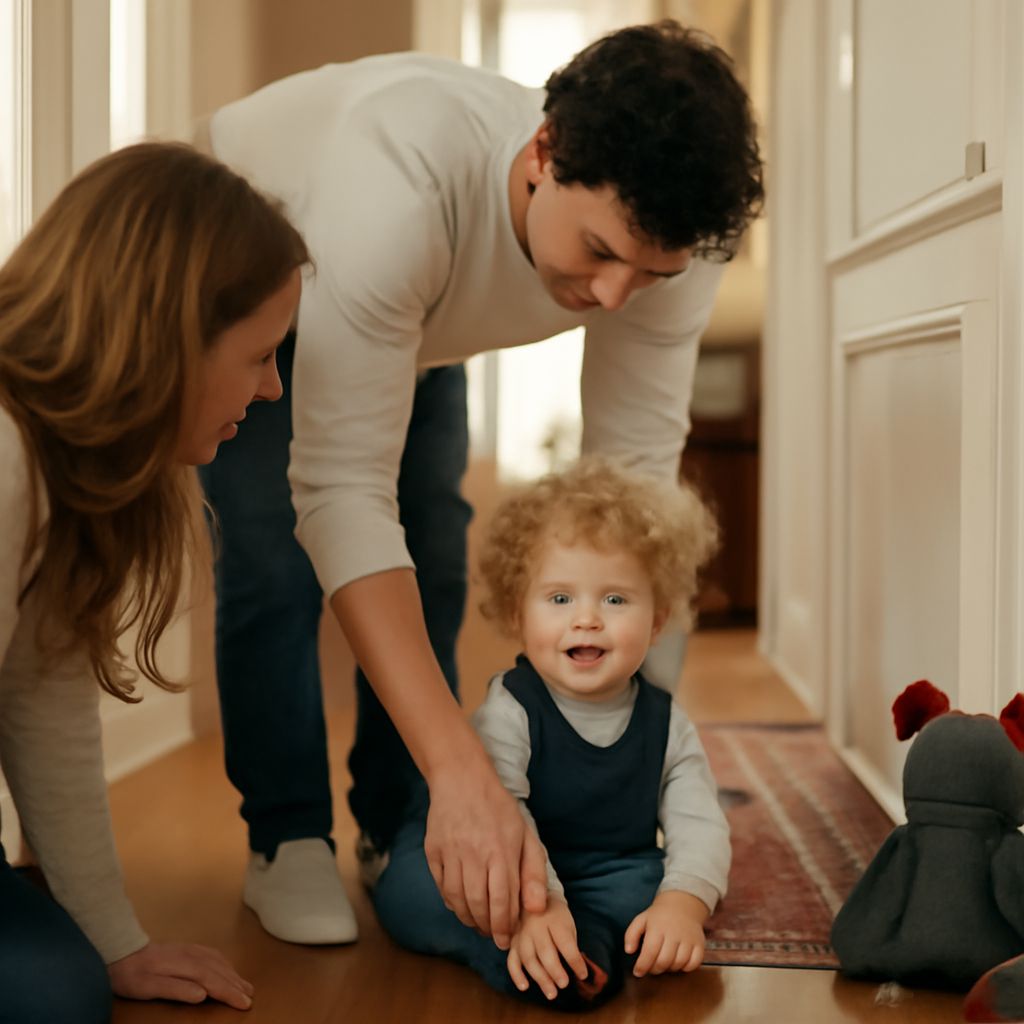
How can a family portrait feel calm when everyone is moving, talking, or caring for a new baby? Begin with soft window light, a comfortable place to sit, and a simple invitation to be close. In photographs of a family with a newborn, a hand supporting a tiny head can say as much about a relationship as a carefully arranged smile.
Start with a shared plan
Before lifting the camera, ask who should be included, what each person feels comfortable doing, and whether any images are private. Explain where the photographs may be shared and obtain agreement before publishing them. Invite children to participate without insisting on a hug or a particular expression. A little control over where to sit or what to hold can make the camera less imposing.
Allow time for feeding, changing, and breaks. A short sequence of family portraits can be built around the household’s pace: make a few frames, pause, and return when people are ready. The quiet interval after someone settles into a seat may offer a more relaxed picture than a long series of directions.
Find the window light
Place the group near a large window, with the light coming from the side or at a gentle angle to their faces. Turn off nearby lamps if their color makes the skin tones look uneven. Direct sun can cast sharp patches; a sheer curtain or a place just outside the sunbeam spreads the light more softly.
Look at the shadows before photographing. If the far side of a face is too dark, turn the group slightly toward the window. Leave enough space for the photographer to step back and include hands and shoulders. In a group portrait, light describes the shape of faces while also giving the group a shared setting.
Newborn family photography with comfortable support
For newborn family photography, begin with a seated adult holding the baby close and supporting the head and neck. Another adult or an older child can sit alongside, with room to move. Keep the baby’s face visible and nose and mouth clear; let the caregiver adjust the hold whenever needed. Avoid balancing the baby in props or asking a child to hold the baby without an adult’s support.
If the baby needs to sleep, follow the American Academy of Pediatrics’ guidance: place the baby on their back on a firm, flat sleep surface such as a suitable crib or bassinet. A photograph can wait while everyone gets comfortable.
For a family session with a newborn, frame one wider view that shows the adult’s arms, then move closer for a detail of fingers resting against a sleeve. Each frame can tell a different part of the same story without changing the baby’s position.
Give faces room to be themselves
Arrange people close enough to see their connection, but let their bodies remain comfortable. One person might lean against another’s shoulder; a child might sit beside a caregiver with a favorite book. Ask the group to look at one another, then take a moment looking toward the camera. A glance or a half smile can be as expressive as everyone smiling at once.
The focus plane is the slice of space that appears sharp. For a group, bring faces roughly the same distance from the camera, focus on an eye, and choose a moderately narrow aperture such as f/5.6 as a starting point. Check the resulting image at magnification; if a face is soft, move people closer to the same plane or use a narrower aperture and adjust the light or exposure.
In photographs of families, take several frames with pauses between prompts. Watch for a hand settling, a shared glance, or someone taking a breath. For the first frame, place a chair beside a window, invite the family to sit together, and check that each face is visible in the light.