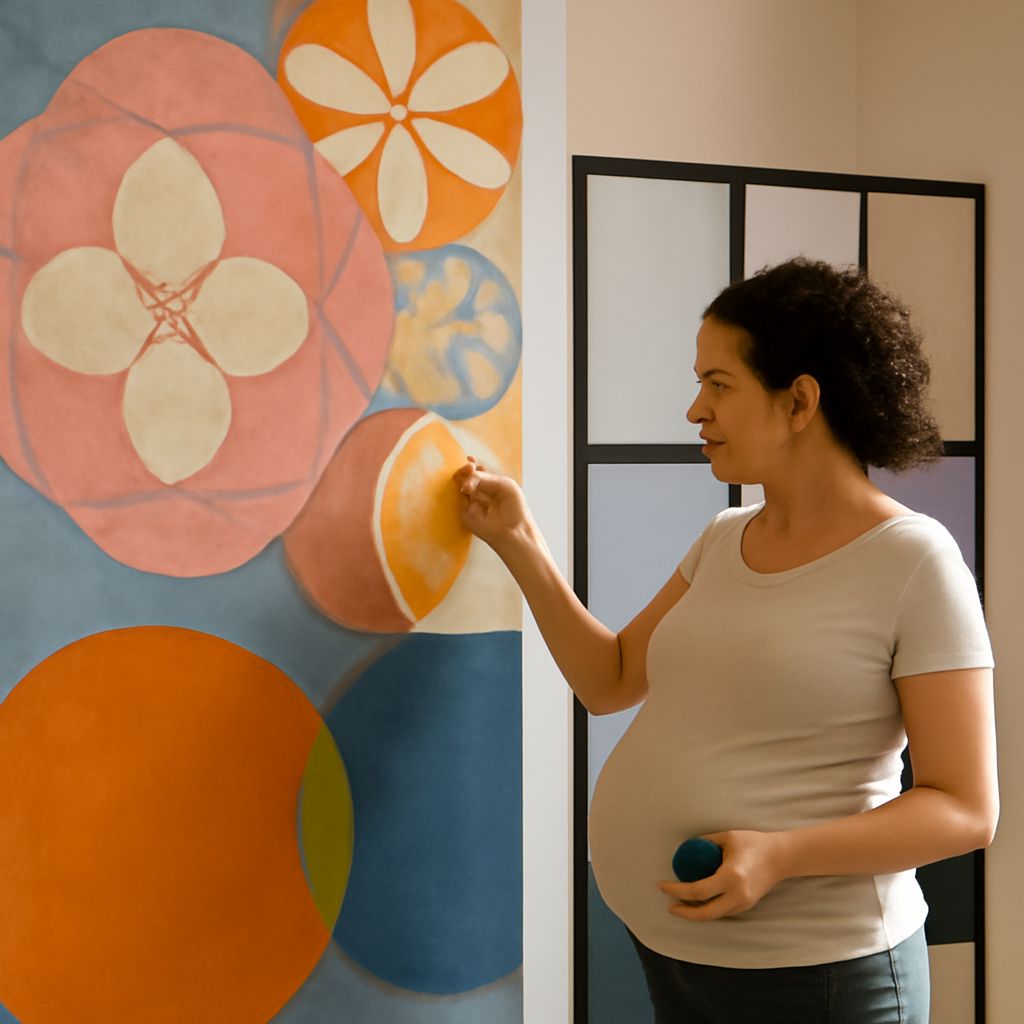
Abstract art has long captivated audiences with its departure from traditional representational forms. By focusing on color, form, and line, it challenges viewers to engage with art on a more conceptual level. This article delves into the origins and evolution of abstract art, tracing its journey from the early 20th century to the present day. By understanding its key movements and influential artists, we can appreciate how abstract art continues to impact contemporary culture.
Understanding Abstract Art
Abstract art is a genre that prioritizes non-representational forms, using elements like color and shape to create compositions independent of visual references from the world. Unlike traditional art, which attempts to mimic reality, abstract art expresses ideas and emotions through its distinct forms. This approach allows artists to explore concepts such as spirituality, emotion, and the subconscious, all without the constraints of depicting physical objects.
When Did Abstract Art Start?
The roots of abstract art can be traced back to the early 20th century. Many art historians pinpoint the beginning of the movement to around 1910, with pioneers like Wassily Kandinsky playing a key role. Kandinsky’s work, characterized by its vibrant colors and geometric shapes, was among the first to fully embrace abstraction. His 1911 painting, “Composition V,” is often cited as one of the earliest examples of pure abstract art, marking a significant departure from the representational traditions of the past.
Key Movements in Abstract Art History
Several movements have been instrumental in the development of abstract art. The most notable include:
- Cubism: Initiated by Pablo Picasso and Georges Braque, Cubism broke objects into geometric shapes, laying the groundwork for further abstraction.
- Futurism: Emphasizing dynamic movement and technology, Futurism celebrated the modern era through abstract forms.
- Abstract Expressionism: This post-World War II movement, with figures like Jackson Pollock and Mark Rothko, focused on spontaneous, subconscious creation.
- Minimalism: Emerging in the 1960s, Minimalism stripped art down to its essential forms, emphasizing simplicity and clarity.
Influential Abstract Artists
Throughout its history, abstract art has been shaped by numerous artists whose innovative approaches have left lasting impressions. Some of the most influential figures include:
- Wassily Kandinsky: Often credited with creating the first purely abstract works, Kandinsky’s art explored the relationship between color and emotion.
- Piet Mondrian: Known for his grid-like compositions and primary color palette, Mondrian sought to express universal truths through abstraction.
- Jackson Pollock: A leading figure in Abstract Expressionism, Pollock’s distinctive drip paintings redefined the possibilities of paint application.
- Hilma af Klint: An early abstract artist, her spiritual and mystical works predated many of her male contemporaries.
The Impact of Abstract Art Today
Abstract art has profoundly influenced modern and contemporary art. Its principles have permeated various cultural domains, from design to architecture. Today, abstraction is not confined to art galleries; it is seen in digital media, advertising, and public spaces, reflecting its enduring appeal and adaptability. By challenging traditional notions of representation, abstract art continues to inspire new generations of artists and audiences alike.