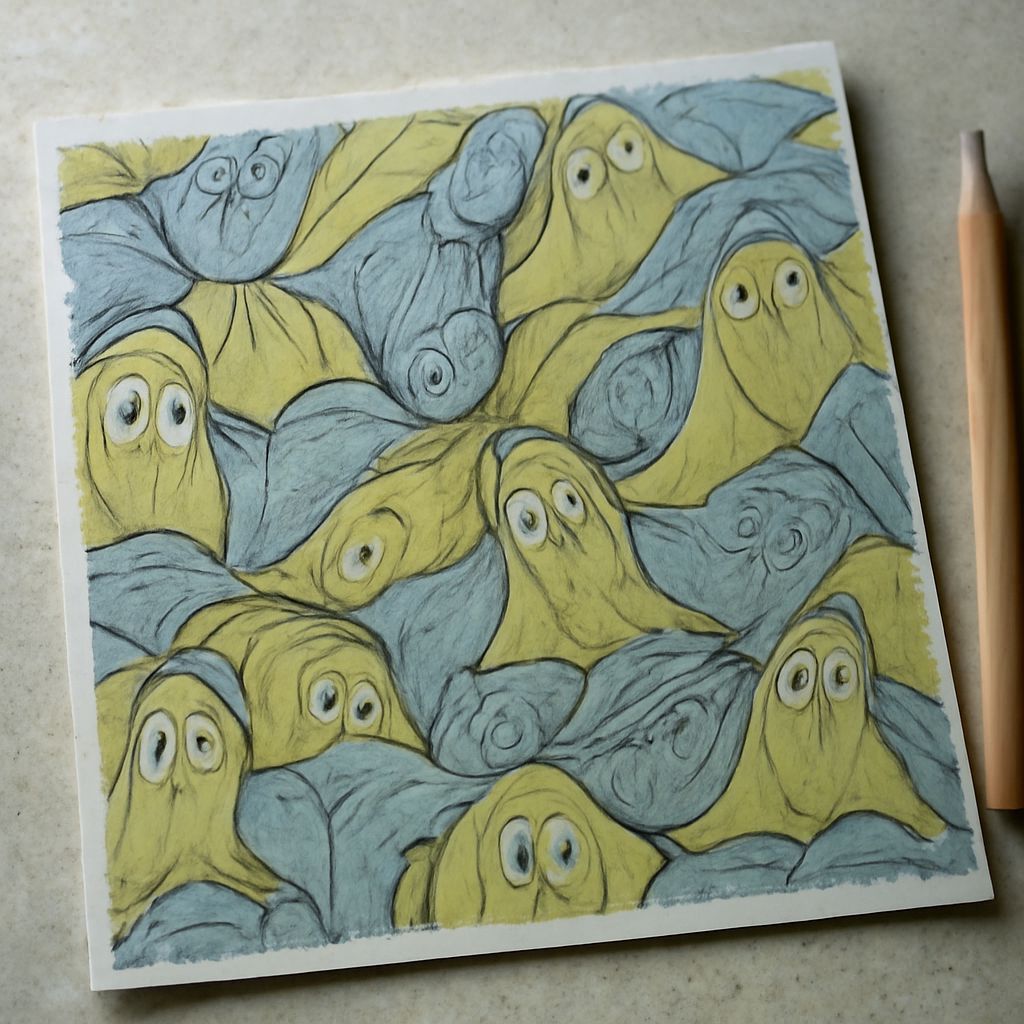
Tessellation patterns are captivating elements in both mathematics and art. These interconnected patterns involve shapes that fit together without gaps or overlaps, creating mesmerizing designs. From ancient mosaics to modern digital art, tessellations have played a significant role in visual culture. This article explores the concept of tessellation patterns, their influence in art, and the contributions of famous tessellation artists.
What Are Tessellation Patterns?
A tessellation pattern consists of repeated geometric shapes that cover a plane without leaving any spaces. This concept is rooted in geometry, where the angles and sides of each shape are calculated to ensure a perfect fit. Common shapes used in tessellations include squares, triangles, and hexagons, but more complex shapes can also be employed. These patterns are not only aesthetically pleasing but also demonstrate mathematical principles in a visual form.
The Role of Tessellations in Art
Tessellations in art transcend mere decoration. They are used to evoke emotions, establish rhythm, and guide the viewer’s eye across a work. Artists employ tessellations to explore symmetry, color theory, and spatial relationships. In Islamic art, tessellations are prevalent due to aniconism, leading to intricate geometric designs in architecture and mosaics. The seamless integration of mathematics and creativity in these works highlights the profound connection between different disciplines.
Famous Tessellation Artists
One of the most renowned tessellation artists is M.C. Escher, whose work revolutionized the world of graphic arts. Escher’s tessellations often featured interlocking creatures and impossible constructions that challenged perceptions. His piece “Reptiles” is a classic example, where perfectly fitted lizards create a sense of movement and depth. Beyond Escher, contemporary artists like Robert Fathauer and Jos Leys continue to push the boundaries of tessellation art. These artists utilize digital tools to craft intricate designs that can be scaled and manipulated in ways traditional methods may not allow.
Creating Your Own Tessellation Art
Creating tessellation art can be an engaging and rewarding endeavor. To begin, choose a basic geometric shape that can tessellate, such as a square or triangle. Modify the edges of the shape while ensuring the altered version can still tessellate. Artists often experiment with color and shading to enhance the visual impact of their patterns. While hand-drawing tessellations can be a meticulous process, digital software offers tools to simplify and expand creative possibilities. Platforms like Adobe Illustrator or online tessellation generators can assist in experimenting with complex designs.
Whether you’re an aspiring artist or a seasoned creator, tessellations offer endless opportunities to explore the intersection of art and mathematics. As you delve into the world of tessellation patterns, consider the legacy of artists who have paved the way and the limitless potential for innovation in this fascinating field.