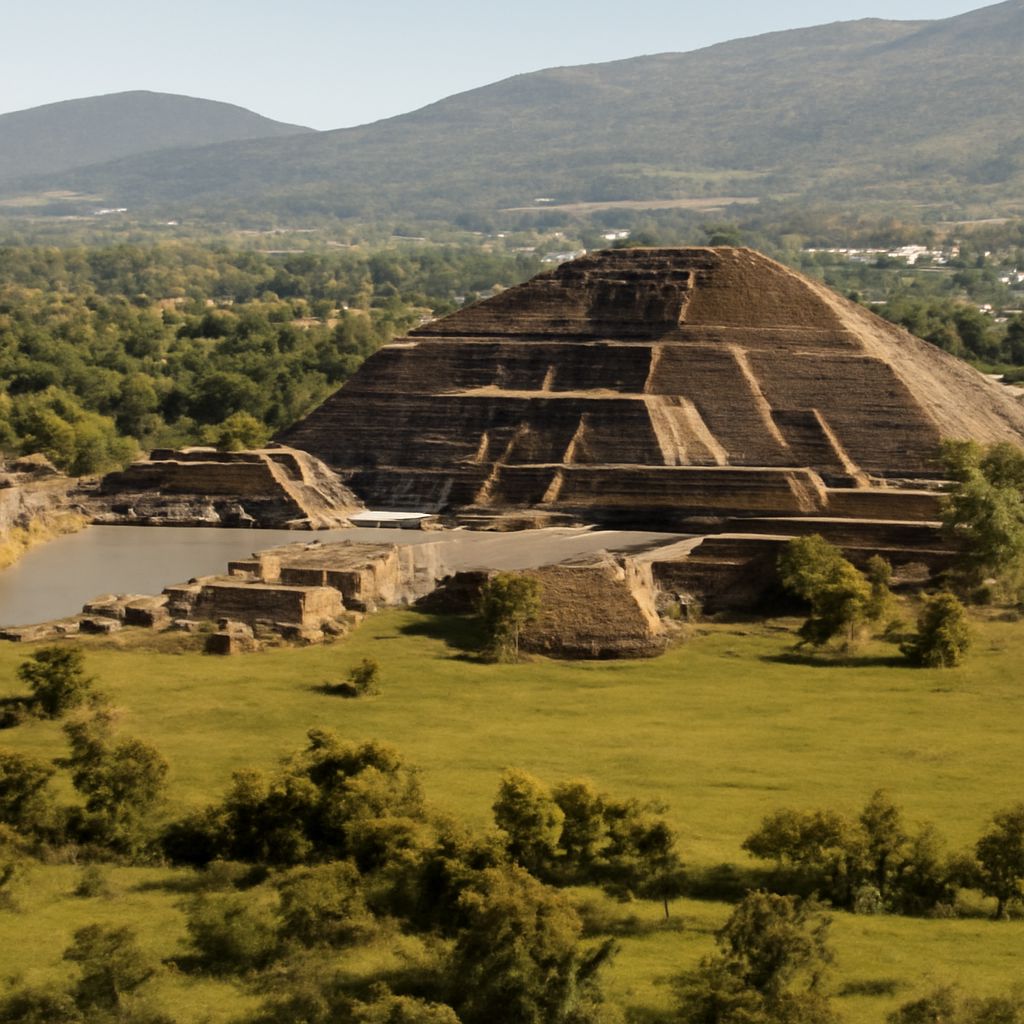
Teotihuacan, Mexico, stands as a testament to the ingenuity and mystery of an ancient civilization. Located northeast of modern-day Mexico City, the Teotihuacan ruins attract countless visitors eager to explore their monumental structures and intricate art. This guide delves into the architectural brilliance, artistic expression, and cultural importance of this UNESCO World Heritage site.
Introduction to Teotihuacan
The ancient city of Teotihuacan, which thrived between 100 BCE and 550 CE, was one of the largest urban centers in the pre-Columbian Americas. Its name, meaning “the place where the gods were created,” hints at its profound spiritual significance. Despite its size and influence, much about its original inhabitants remains shrouded in mystery, as they left no written records.
The Architectural Marvels of Teotihuacan
The Teotihuacan ruins are renowned for their grandiose architecture, which continues to impress modern-day archaeologists and tourists alike. The city’s layout is based on a grid pattern, centered by the grand Avenue of the Dead. This broad road stretches for over two kilometers, flanked by impressive structures.
Among the most iconic buildings is the Pyramid of the Sun, which rises to an impressive 65 meters, making it one of the largest pyramids in the world. Its counterpart, the Pyramid of the Moon, offers a panoramic view of the site and is thought to have been used for ceremonial purposes. The Temple of the Feathered Serpent, adorned with intricate carvings, further demonstrates the sophisticated architectural prowess of the Teotihuacanos.
Art and Symbolism in Teotihuacan
Teotihuacan’s art is rich with symbolism, offering insights into the religious and cultural life of its inhabitants. Murals, sculptures, and pottery discovered on-site are adorned with complex motifs and vibrant colors. The murals, in particular, display a wide array of deities and mythical creatures, reflecting the city’s spiritual beliefs.
The Feathered Serpent, or Quetzalcoatl, frequently appears in the art of Teotihuacan, symbolizing fertility, wind, and the dawn. These artistic expressions provide valuable clues about the city’s societal structure and religious practices, even as the precise meanings remain a topic of scholarly debate.
Cultural Significance of the Ruins
The cultural significance of Teotihuacan extends well beyond its architectural and artistic achievements. As a major center of trade, it facilitated cultural and economic exchanges across Mesoamerica. The city’s influence reached far, impacting the development of later civilizations such as the Maya and the Aztecs.
Moreover, Teotihuacan’s layout and monuments reflect a deep connection to cosmology and astronomy. The alignment of structures with celestial bodies suggests a sophisticated understanding of astronomy, which played a crucial role in their ceremonial and agricultural activities.
Today, Teotihuacan remains a vital part of Mexico’s national identity, drawing scholars and tourists eager to unravel its mysteries and appreciate its historical grandeur.