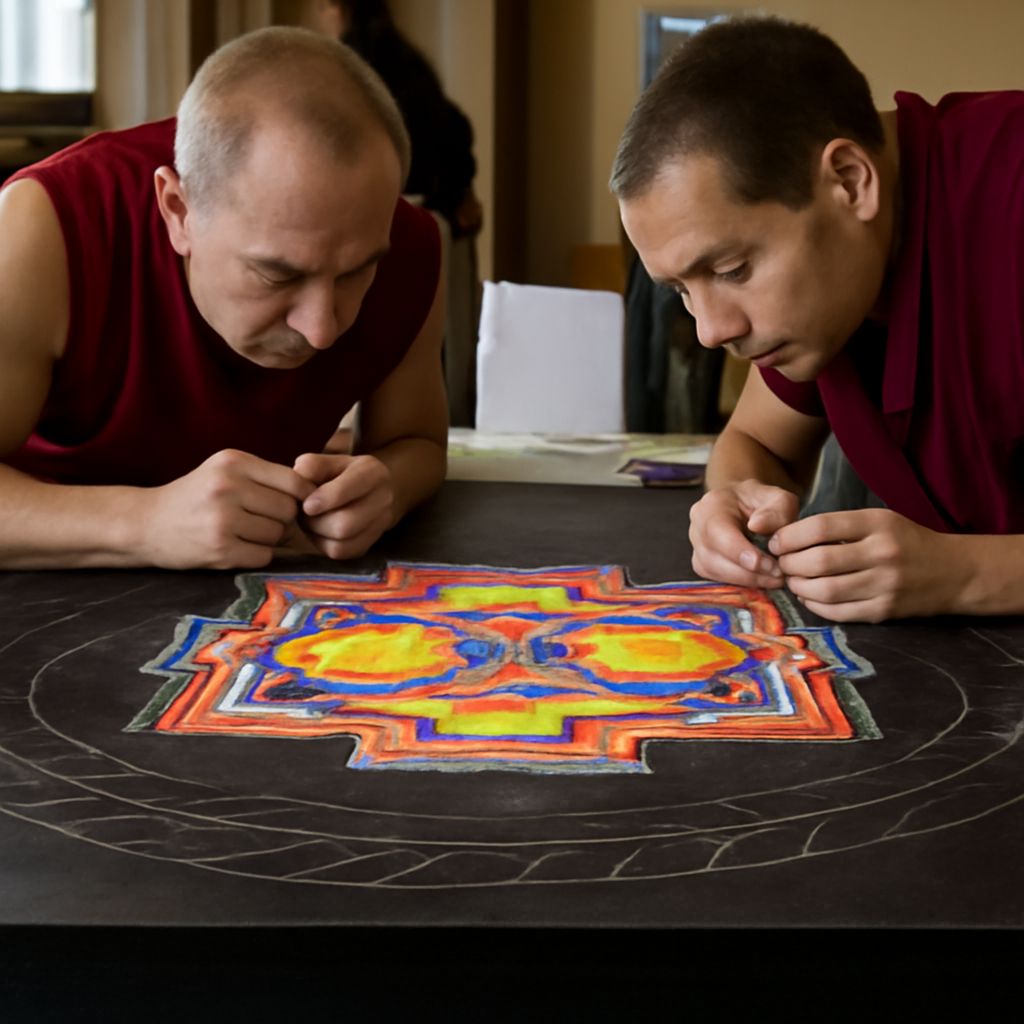
Tibetan mandalas, renowned for their intricate designs and profound spiritual meanings, captivate audiences worldwide. Deeply rooted in Buddhist traditions, these geometric compositions not only represent the universe but also serve as tools for meditation and enlightenment. Among the most mesmerizing forms of mandalas is the monk sand art, a temporary yet stunning creation that reflects the essence of Tibetan spirituality.
The Spiritual Significance of Tibetan Mandalas
Tibetan mandalas hold immense spiritual significance, often used as aids in meditation practices. These sacred circles symbolize the cosmos, guiding practitioners towards a deeper understanding of the universe and their place within it. The symmetrical designs are meticulously crafted to encourage focus and facilitate spiritual awakening. Mandalas are not just artistic expressions; they are visual representations of the path to enlightenment.
The Creation Process of Monk Sand Art
The creation of monk sand art is a painstaking and meditative process. Monks use colored sand, often made from crushed gemstones, to form intricate patterns on a flat surface. This process requires immense concentration and can take days to complete. The tools used, known as chak-pur, allow the sand to flow gracefully, ensuring precision in every detail. Each monk plays a specific role, contributing to the harmonious completion of the mandala.
Symbolism and Colors in Tibetan Sand Art
Every aspect of Tibetan sand art is rich in symbolism. The colors chosen are not merely for aesthetic appeal but convey specific meanings. For instance, white represents purity, red denotes power, yellow symbolizes humility, green signifies balance, and blue reflects vastness. These colors are thoughtfully integrated to tell a story, embodying different aspects of Buddhist teachings and philosophies. The intricate patterns and hues come together to form a visual meditation.
The Impermanence and Ritual of Sand Mandalas
One of the most profound elements of Tibetan sand art is its impermanence. Upon completion, the sand mandala is deliberately dismantled in a ceremonial ritual, symbolizing the ephemeral nature of life. This act serves as a powerful reminder of the Buddhist belief in non-attachment and the ongoing cycle of life and death. The sand is usually collected and released into a body of water, spreading the mandala’s blessings and positive energies into the world.