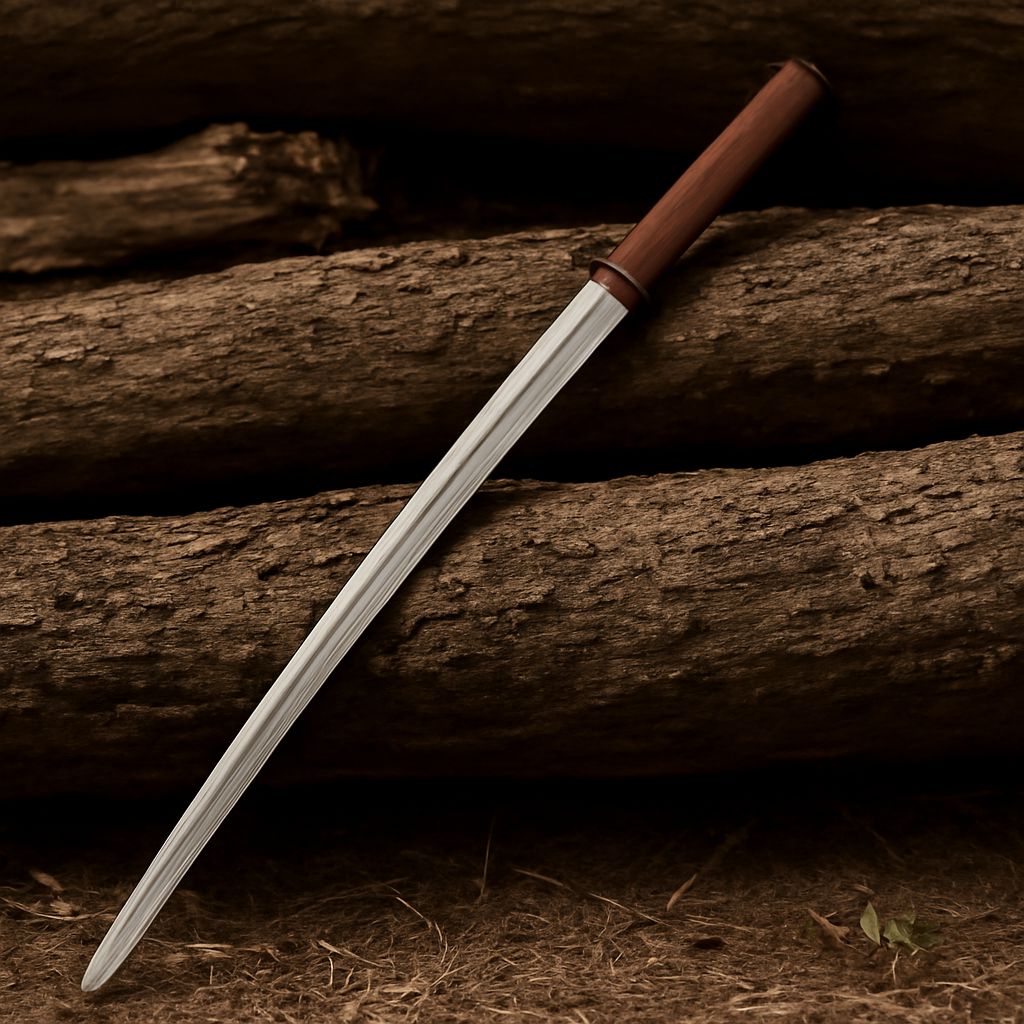
The odachi weapon commands immediate attention for its immense size, formidable presence, and the legendary status it occupies among Japanese swords. Recognized for its length, artistry, and specialized use, the odachi is more than a striking artifact; it embodies a unique chapter in the evolution of the Japanese long sword. This article demystifies the odachi weapon, tracing its origins, craftsmanship, and its distinction from the two handed katana and other iconic blades.
What Is the Odachi Weapon?
The odachi weapon, also known as “great tachi,” is a type of Japanese long sword distinguished by its extraordinary length—typically exceeding 90 centimeters (about 35 inches) in blade length alone. Unlike the more commonly seen katana, which averages roughly 70 centimeters, the odachi was designed for two-handed use and required exceptional skill to wield effectively.
Used primarily by samurai during the late Kamakura to Muromachi periods (approximately 14th to 16th centuries), the odachi served both as a battlefield weapon and as a ceremonial object. While its imposing length gave foot soldiers a significant reach advantage against cavalry and infantry, the odachi was not a practical sidearm for close-quarters combat. Its sheer size often necessitated carrying it slung across the back or borne by an attendant, setting it apart from other swords of the era.
Although odachi and “Japanese long sword” are sometimes used interchangeably, the odachi weapon refers specifically to swords that exceed the length typical even among long swords. The odachi’s design and use case were distinct, representing both martial innovation and status.
Historical Significance and Evolution
The odachi weapon emerged during a period of intense military conflict in Japan. Its earliest adoption can be traced to the Nanboku-chō period (1336–1392), when large-scale battles inspired experimentation with longer blades. The odachi’s extended reach was invaluable in open-field engagements, allowing infantry to strike mounted opponents or break through enemy ranks at a distance.
However, as warfare tactics evolved and close-combat environments became more prevalent—especially with the rise of castle sieges and urban fighting—the practicality of the odachi waned. Its unwieldiness in tight quarters and the logistical difficulties of forging, carrying, and maintaining such a large sword led to a decline in battlefield use by the late Muromachi period. Many odachi were subsequently converted into shorter swords, such as katana, or repurposed as ceremonial and votive offerings at Shinto shrines.
Despite its battlefield shortcomings, the odachi weapon transitioned into an object of artistry and status. Swordsmiths continued to forge odachi for temple offerings, competitions of skill, and as demonstrations of technical mastery. Even today, surviving odachi are treasured as cultural artifacts, embodying both martial spirit and artistic achievement.
Craftsmanship and Visual Impact in Japanese Art
Forging an odachi weapon presented considerable challenges. The sheer length of the blade required specialized techniques to maintain structural integrity, achieve even tempering, and ensure resilience. Unlike standard swords, an odachi could not be tempered in a single heating; swordsmiths developed innovative methods to heat and quench the blade evenly, often requiring several assistants and custom forges.
The visual impact of an odachi is unmistakable. With a gracefully curved blade, elongated handle, and often elaborate fittings, each odachi served as a testament to a swordsmith’s artistry. High-polish finishes accentuated the hamon (temper line), and ornate mountings elevated the sword’s ceremonial presence. In Japanese art, the odachi is frequently depicted as a symbol of power, ambition, and martial prowess—commonly featuring in scrolls, prints, and temple displays.
Some of the most renowned odachi, such as the Norimitsu Odachi (dating to the 15th century), measure more than 220 centimeters (86 inches) in total length. These monumental swords were rarely intended for actual combat, instead representing offerings to deities or objects for public admiration. Their creation required months of labor, collaboration between artisans, and meticulous attention to detail—further reinforcing the odachi’s legendary reputation.
Odachi vs. Japanese Long Sword and Two Handed Katana
Distinguishing the odachi weapon from the broader category of Japanese long swords, and particularly from the two handed katana, is essential for understanding its unique role in Japanese sword history. The term “Japanese long sword” can refer to any blade longer than a standard katana, including tachi and nodachi, but the odachi stands out both for its dimensions and intended function.
While both the odachi and two handed katana are wielded with both hands, the katana is notably shorter and more maneuverable. A typical two handed katana features a blade between 60 and 80 centimeters (24–31 inches), designed for quick draws and versatile techniques suitable for one-on-one duels or close combat. In contrast, the odachi’s blade length often makes it impractical for rapid movement, and it lacks the portability that defines the katana’s legacy.
In terms of craftsmanship, both swords demand high technical skill, but the odachi’s size amplifies these challenges exponentially. Fewer odachi have survived compared to katana, and their preservation in temples and museums reflects both their rarity and symbolic importance. While the katana remains the most recognized emblem of the samurai, the odachi weapon persists in Japanese cultural memory as a symbol of martial grandeur and artistic achievement, far surpassing the ordinary definition of a Japanese long sword.