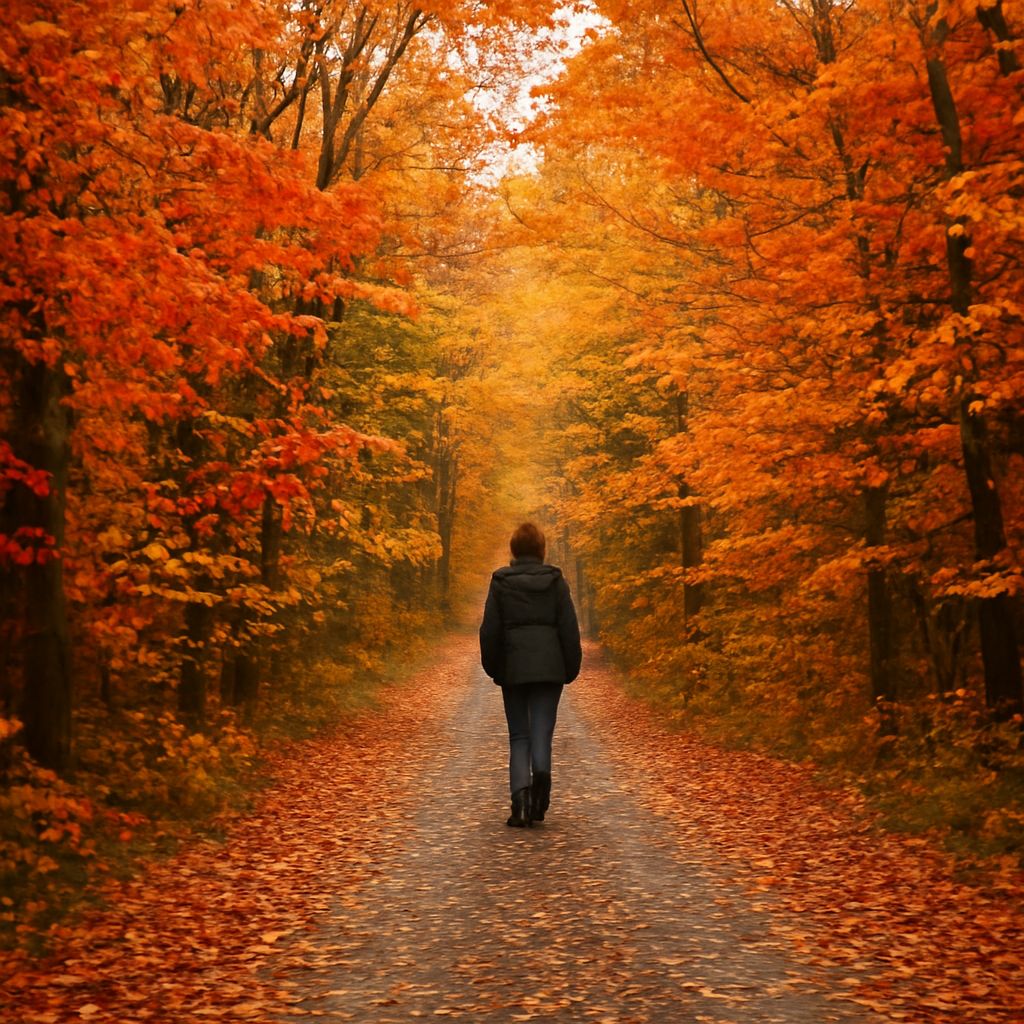
A yellow leaf against wet gray pavement can say as much about fall as a hillside filled with red trees. Its color gains force from what surrounds it: the muted ground, a dark stem, a small reflection. Photographs made in autumn can follow those relationships, using the season’s changing palette to show a particular place rather than collecting bright colors alone.
Build a Palette, Not Just a Collection of Leaves
Look for combinations before reaching for the camera. Red foliage against a blue-gray sky creates one kind of contrast; orange leaves beside green grass tell a different story about the season’s transition. Brown seed heads, pale bark, dark water, and stone can give warm colors room to stand out.
A wide fall landscape photograph can establish how the palette is distributed across a scene. A closer frame might isolate a few leaves on a bench or a patch of color reflected in a window. Both approaches can belong in the same series when the detail helps explain the larger scene.
In fall photography, neutral elements are not necessarily distractions. A strip of gray path can lead the eye through a mass of color, while an evergreen can give a yellow canopy a cooler counterpoint. Check the edges of the frame and choose whether each element adds structure or draws attention away from the subject.
Use Backlight and Cloudy Light Differently
Backlighting occurs when the main light comes from behind the subject. A translucent leaf can glow as sunlight passes through it, revealing veins and variations in color. Place a darker background behind the leaf when possible so its illuminated edge remains visible. Watch for flare, the haze or bright shapes produced when strong light enters the lens; a small change of position can alter it.
An overcast day offers a softer, more even light. Without hard shadows, subtle differences among yellow, green, and brown leaves may become easier to see. Wet surfaces can deepen color, though their bright reflections may hide texture. Move slightly to compare what the camera sees from each angle.
When making photographs of fall colors, treat the light as part of the palette. Strong sun can bring a lively glow, while clouds can support a quieter image. Neither condition guarantees better color; each emphasizes different details.
Expose for the Details That Matter
Bright sky behind foliage can exceed the range a camera captures in a single exposure. If the sky becomes a blank white patch, try framing it out or changing position. If the leaf itself is too bright, reduce exposure and check that its veins remain visible. The background may then become darker, which can be an intentional part of the image.
Use the camera’s histogram, a graph showing the distribution of image brightness, or highlight warning to identify areas losing detail. A dark background does not automatically mean an exposure is wrong. Protect the important highlights, then decide whether enough information remains in the shadows for the intended result.
Reflections offer another way to photograph autumn color. A pond can carry the shape and color of trees without showing the trees themselves. Include an edge of shore or a floating leaf if the viewer needs a clue about the surface; crop more tightly if an abstract pattern is the goal. Ripples may soften the reflection, while calm water creates a clearer duplicate.
Keep Color Convincing in the Edit
White balance influences whether an image appears warmer or cooler. Start with a setting that renders the scene plausibly, then compare the result with a neutral surface such as gray stone if one is present. A warm sunset may deserve warmth in the final image; making every surface orange can erase the contrast that gave the scene its character.
Adjust overall saturation gently and inspect individual colors. Strong red or yellow can lose texture when pushed too far, while green or blue may still be important to the composition. Compare the edited version with the original and check that separate leaves remain distinguishable in bright areas.
A series of autumn photographs can move from a broad landscape to a reflected canopy and a single leaf on pavement. In fall photography, those changes of scale let the palette tell more than one story while keeping the light, the place, and the season connected.