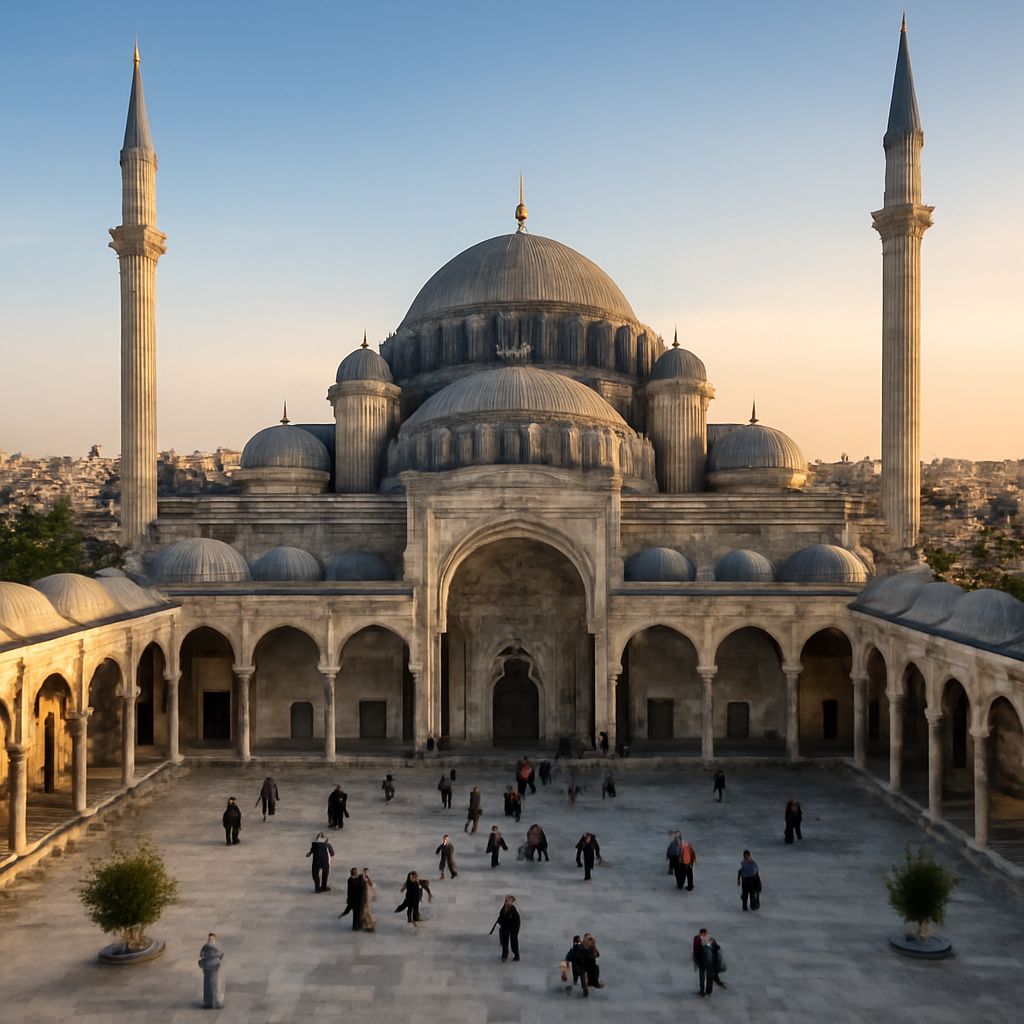
The Umayyad Mosque, often referred to as the Mosque of Damascus, stands as a magnificent testament to Islamic architecture and cultural heritage. Situated in the heart of Damascus, it is not only one of the largest and oldest mosques in the world but also a crucial symbol of the Umayyad Caliphate’s influence. This article explores its historical significance, architectural brilliance, artistic treasures, and enduring legacy.
The Historical Significance of the Umayyad Mosque
Constructed between 706 and 715 AD under Caliph Al-Walid I, the Umayyad Mosque is a landmark of early Islamic history. Built on the site of a Roman temple and a Christian basilica, it symbolizes the transition of Damascus into an Islamic center. The mosque’s construction marked a significant moment in the Umayyad Caliphate, showcasing their power and cultural sophistication.
This site has served religious functions for thousands of years, reflecting a blend of cultural influences that include Roman, Byzantine, and Islamic. Its historical layers make it a microcosm of the city’s rich past, attracting scholars and tourists interested in its multi-faith history.
Architectural Features of the Mosque of Damascus
The Umayyad Mosque is renowned for its architectural innovation, combining influences from various cultures. Its layout includes a vast courtyard surrounded by arcades, reflecting the grandeur of Roman structures. The prayer hall’s vastness, supported by rows of columns, is designed to accommodate large congregations, emphasizing communal worship.
Distinctively, the mosque features three towering minarets, each with unique historical backgrounds and architectural styles. The Minaret of the Bride, the Minaret of Jesus, and the Western Minaret are landmarks that have become symbols of Damascus’s skyline.
Art and Decoration Inside the Mosque
The interior of the Umayyad Mosque is adorned with exquisite mosaics and intricate artworks, echoing Byzantine influences. One of the most striking features is the extensive mosaic work depicting lush landscapes and architectural scenes, symbolic of paradise. This artistry not only enhances the mosque’s beauty but also serves as a spiritual inspiration for worshippers.
Additionally, the mosque houses the shrine of John the Baptist, revered by both Christians and Muslims. This coexistence of faiths within the mosque’s walls exemplifies its role as a unifying historical site.
Cultural Impact and Legacy
The Umayyad Mosque has played a pivotal role in the cultural and religious life of Damascus. Over the centuries, it has been a center for Islamic learning and a symbol of the city’s resilience and spiritual significance. Its legacy is evident in the architectural styles of mosques built across the Islamic world.
Despite challenges, including natural disasters and conflict, the mosque remains a place of peace and contemplation. It continues to inspire architects, historians, and visitors, representing an enduring link between past and present, East and West.