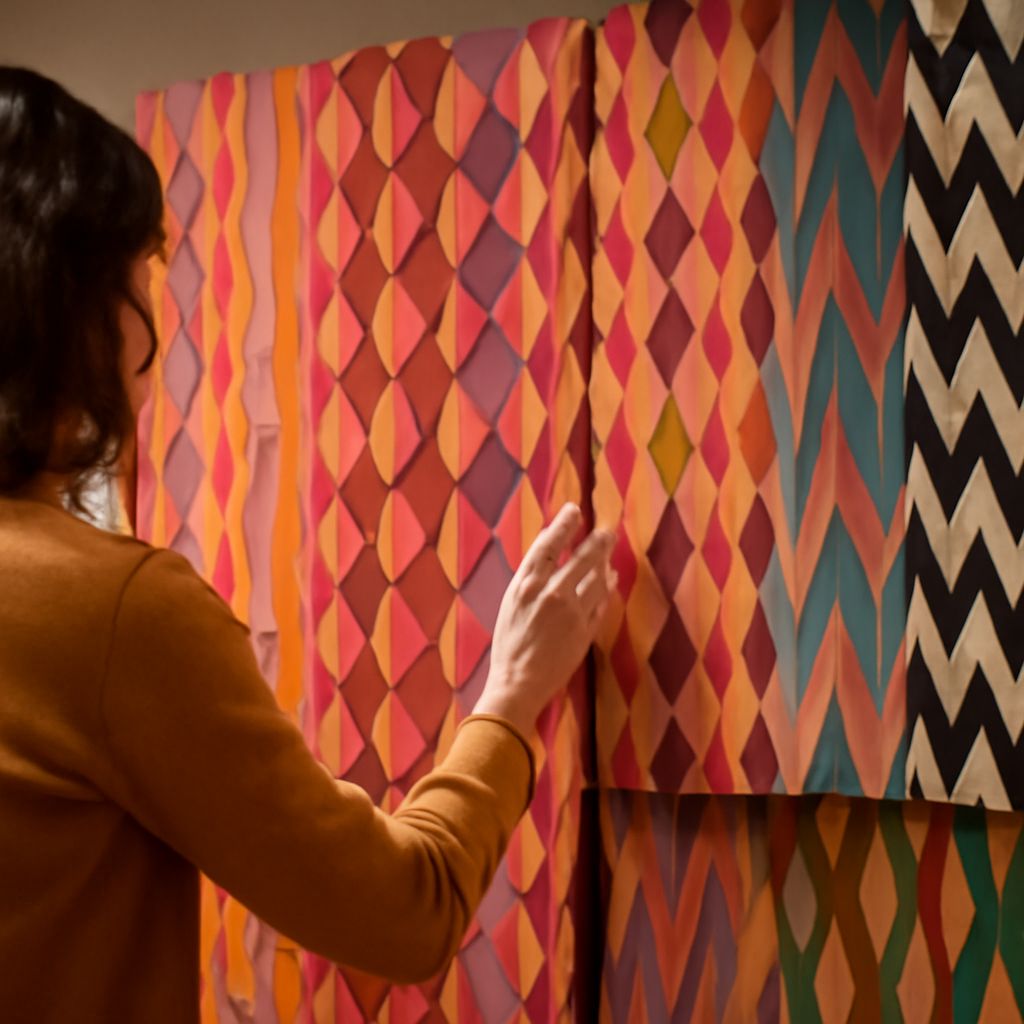
Pattern in art, negative space, and line are three composition tools that control how an image feels and how the eye moves through it. Pattern repeats a visual element to create rhythm; negative space shapes the subject by surrounding or separating it; line creates direction, leading attention from one area to another.
These tools work in both painting and photography. A tiled wall can establish a steady beat, an open sky can make a small figure feel isolated, and a road can pull the viewer toward a distant building. The strongest compositions use these elements together, either reinforcing one another or creating deliberate tension.
How Pattern in Art Creates Rhythm: Repeated Tiles and Organic Motifs
Pattern is the recurrence of visual features such as shape, color, texture, spacing, or direction. Its visual definition is simple: one mark or form appears again and again across a surface. A row of blue-and-white tiles is a regular pattern because each unit repeats at a predictable interval. Leaves, waves, brushstrokes, or animal markings create organic patterns because their similarities remain visible while their spacing and form vary.
Repetition gives the eye a rhythm to follow. Even spacing produces order and calm, while shifts in scale, color, or interval introduce movement and prevent monotony. A painter might repeat short red strokes across a field to make the surface pulse. A photographer might frame a facade so that windows fill the image in a measured grid.
Pattern can support a subject or compete with it. A repeated background of dark windows makes a pale figure stand out through contrast. If the figure wears a similar shape or color, it may merge into the pattern, creating camouflage or visual ambiguity. To control emphasis, vary the pattern near the subject: interrupt a row, change the scale, or leave a small gap. The eye notices the break because it differs from the established rhythm.
How Negative Space Art Defines the Subject: Figure, Ground, and Counterform
Negative space is the area around, between, and sometimes inside the main forms. It is not unused or blank space. In negative space art, the surrounding area actively defines the figure, establishes its scale, and determines how much visual pressure it carries. The subject and its surroundings form a positive-negative relationship: changing one changes the perceived shape and importance of the other.
Consider a black bird against a broad white field. The bird is positive space, but the white area gives its silhouette clarity and makes its small size meaningful. The shape around the bird is also a counterform: if the bird shifts position, the surrounding white shape changes even though the paper remains the same. In a portrait, the space between an arm and the torso can create a readable opening; closing that gap may turn two forms into one heavy shape.
Use negative space to control emphasis and mood. Tight space around a subject creates compression, energy, or confinement. Generous space can suggest quiet, distance, or vulnerability. Empty-looking areas also provide visual pauses between patterns and lines. When composing, inspect the shapes around the subject rather than judging only the subject itself. Uneven gaps, awkward tangencies, or a crowded edge can weaken an otherwise strong form.
How Line Photography Directs Attention: Roads, Shadows, and Architecture
Line is a path created by an edge, mark, contrast, or repeated alignment. In line photography, a road, railing, roofline, shadow, or row of poles can act as a directional guide. Lines do not need to be literal strokes; a sequence of bright windows or figures can imply one.
Horizontal lines usually communicate stability and rest. Vertical lines can suggest height, strength, or confinement. Diagonals create motion and instability, while curves slow the eye and make its route less predictable. Converging lines, such as railway tracks or a road narrowing toward the horizon, create depth and often lead directly to a focal point.
Use line by deciding where the eye should enter and where it should arrive. A foreground road can begin at a lower corner and point toward a person or building. A strong shadow can divide the frame and direct attention across it. Watch for competing lines: a fence that leads out of the frame may pull attention away from the subject, while a vertical pole cutting through a face can create an unintended interruption. Cropping, viewpoint, and focal length can strengthen or soften these routes.
Combining Repetition, Space, and Direction: A Repeated Facade, Open Sky, and Leading Road
A street photograph can combine all three tools in one clear structure. Imagine a repeated apartment facade occupying the right side of the frame, an open sky filling the upper left, and a road entering from the lower foreground before leading toward the building. The windows establish pattern and rhythm. The sky acts as negative space, separating the dense facade from the frame’s edge and giving the image room to breathe. The road supplies a diagonal line that carries the eye into the scene.
These elements can reinforce one another when the road points toward a distinctive window or doorway. The repeated facade creates a stable visual field, the open sky emphasizes the building’s silhouette, and the road provides movement toward the focal point. A person positioned near the road’s endpoint can become the subject without needing strong color or scale.
They can also counterbalance one another. If the facade is extremely regular, a broad irregular sky prevents the image from feeling mechanical. If the road is an aggressive diagonal, generous space above it can absorb some of its energy. If the sky dominates, the repeated windows and converging road restore visual weight. Adjust the crop until the pattern, counterform, and line meet at a deliberate hierarchy: rhythm supports the structure, negative space clarifies it, and direction tells the viewer where to look next.