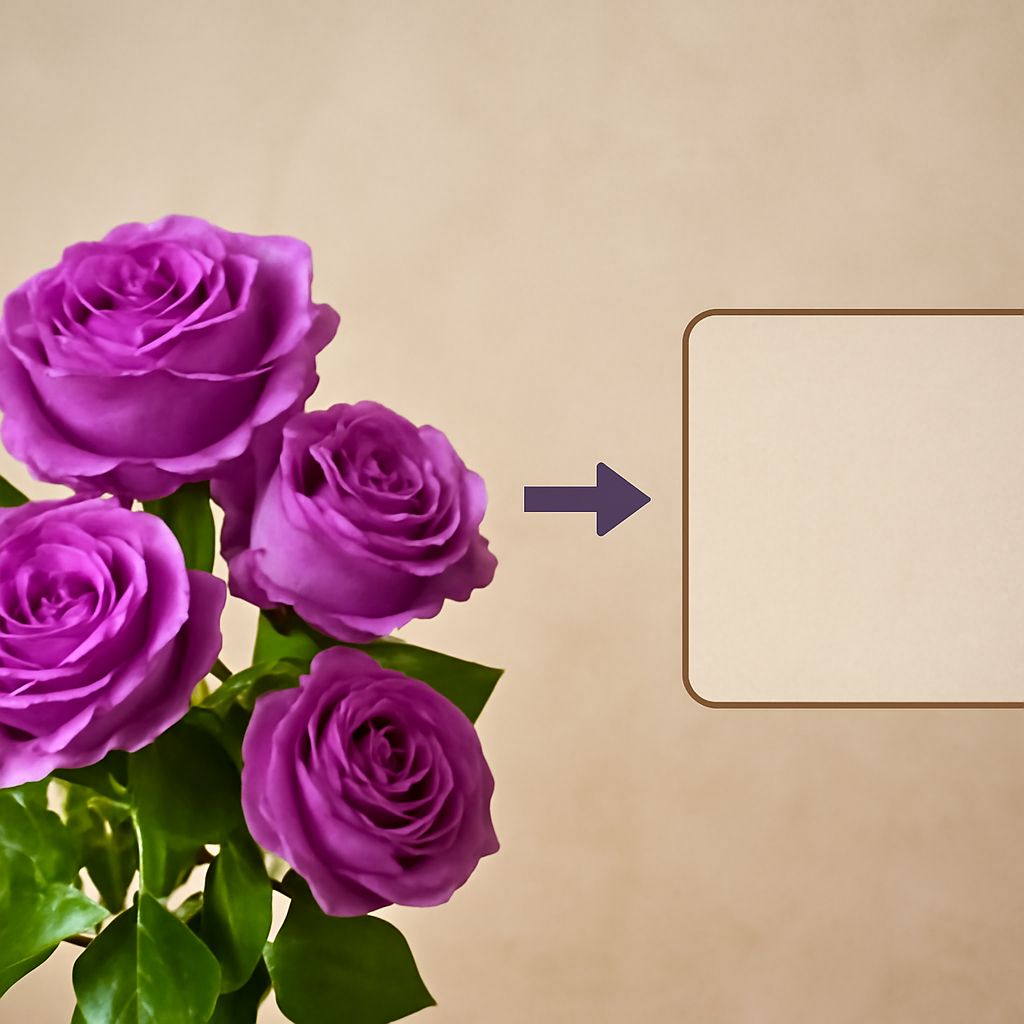
Purple roses captivate with their distinctive hue and rare beauty, but their allure goes far beyond appearance. The purple rose meaning centers on enchantment, mystery, and the sense of fascination that transcends ordinary love. Their message is nuanced—neither as direct as red roses nor as innocent as white. Whether you’re asking, “What does a purple rose mean?” or seeking to express a more sophisticated sentiment, understanding the symbolism and cultural background of purple roses can help you choose them with intention and style.
What Is the Meaning of a Purple Rose?
The meaning of a purple rose is rooted in enchantment, regal majesty, and love at first sight. Unlike the straightforward passion of red or the friendship of yellow, purple roses symbolize a sense of marvel and admiration that can border on the magical. When you send purple roses, you’re conveying an extraordinary message: admiration for someone’s unique charm or a deep sense of awe.
There are shades of nuance within the purple rose family. Lighter tones—such as lavender and lilac—tend to represent the initial flutter of love or admiration, almost like a gentle but irresistible fascination. Deeper purples evoke royalty, luxury, and a reverence that feels timeless and dignified. A single purple rose might signal that the recipient has cast a spell, while a bouquet can express a sense of wonder or even spiritual love.
In modern floral language, giving purple roses says, “You’re extraordinary,” or “You entrance me.” They suit occasions where you want to acknowledge someone’s uniqueness or express feelings that are profound yet not conventional. While not the classic rose for romantic confessions, they excel when you want to honor a special bond, commemorate a transformative moment, or offer a compliment that is both rare and elegant.
The Symbolic History of Purple Roses
The history of purple roses is relatively young compared to other rose colors. Early references to roses in antiquity focus largely on red, pink, and white varieties—purples, as we recognize them today, are the result of centuries of hybridization. The development of the purple rose began in earnest during the 19th and 20th centuries, when breeders crossed European and Asian rose species to achieve the coveted violet and lavender tones.
Historically, purple has long been associated with royalty and power, a connection rooted in the rarity and cost of purple dye in the ancient world. This regal reputation transferred to purple roses as they entered cultivation. Their presence in art and horticulture has always implied a sense of exclusivity and sophistication, making them symbols of opulence and prestige.
As rose breeding advanced, gardeners and florists embraced purple roses as emblems of new beginnings, mystical connection, and creative inspiration. While they may lack the ancient mythological tales of red or white roses, purple roses have carved a place as the chosen flower for those who value individuality, ambition, and a touch of the otherworldly.
Cultural and Artistic Significance of Purple Roses
Purple roses have made a noticeable impact in literature, visual art, and ceremony. In poetry and prose, they are often used to evoke mystery, noble character, or the allure of the unattainable. Artists favor purple roses for their striking color, using them as focal points in arrangements to symbolize depth of feeling or spiritual transformation.
Across various cultures, the purple rose carries themes of admiration and high respect. In Western contexts, they might be chosen for milestones—such as graduations or anniversaries—where the recipient’s achievements are celebrated as truly remarkable. In some Eastern traditions, purple flowers in general are linked with spirituality and the bridging of earthly and divine realms, a resonance reflected in the purple rose’s aura of enchantment.
Contemporary designers incorporate purple roses into fashion, high-end events, and signature bouquets to create an atmosphere of mystery and allure. Their rarity ensures they remain a statement choice, never a cliché. Whether featured in a modern art installation or a traditional arrangement, purple roses convey creativity and depth that few other flowers can match.
When and How to Give Purple Roses
Occasions for Purple Roses
Purple roses are ideal for expressing admiration that goes beyond the everyday. They are particularly well-suited for:
- New romantic interests: The intrigue and fascination represented by purple roses make them a memorable choice for signaling attraction and admiration without the intensity of red roses.
- Milestone celebrations: Graduations, promotions, or major achievements are elevated by the sophistication of purple roses, which honor accomplishment and uniqueness.
- Anniversaries or significant partnerships: A bouquet of deep purple roses can commemorate years of growth, shared dreams, and a bond that feels both special and enduring.
- Sympathy and remembrance: Their spiritual undertone makes them appropriate for honoring someone’s memory in a way that feels respectful and uplifting.
While not the conventional choice for Valentine’s Day or weddings, purple roses shine when you want to make a statement that is as unique as your recipient.
Pairing Purple Roses with Other Flowers
For an impactful arrangement, purple roses pair elegantly with complementary or contrasting blooms. Soft whites and creams enhance their regal tone, while silvery foliage (such as eucalyptus or dusty miller) amplifies their ethereal quality. For a vibrant, contemporary look, mix purple roses with deep reds or blues for a palette that feels both bold and modern.
In practice, consider the message you wish to convey. Combining lavender roses with white lilies emphasizes innocence and wonder, while pairing deep purple roses with red or pink peonies can suggest a blend of admiration, affection, and lasting commitment. For artistic arrangements, don’t hesitate to add unique textures—succulents, berries, or wildflowers—to create a sense of narrative and visual intrigue.
Ultimately, giving purple roses is about celebrating the remarkable, the mysterious, and the beautifully unique. With intention and attention to symbolism, this rare flower becomes a refined messenger of awe, admiration, and regal grace.