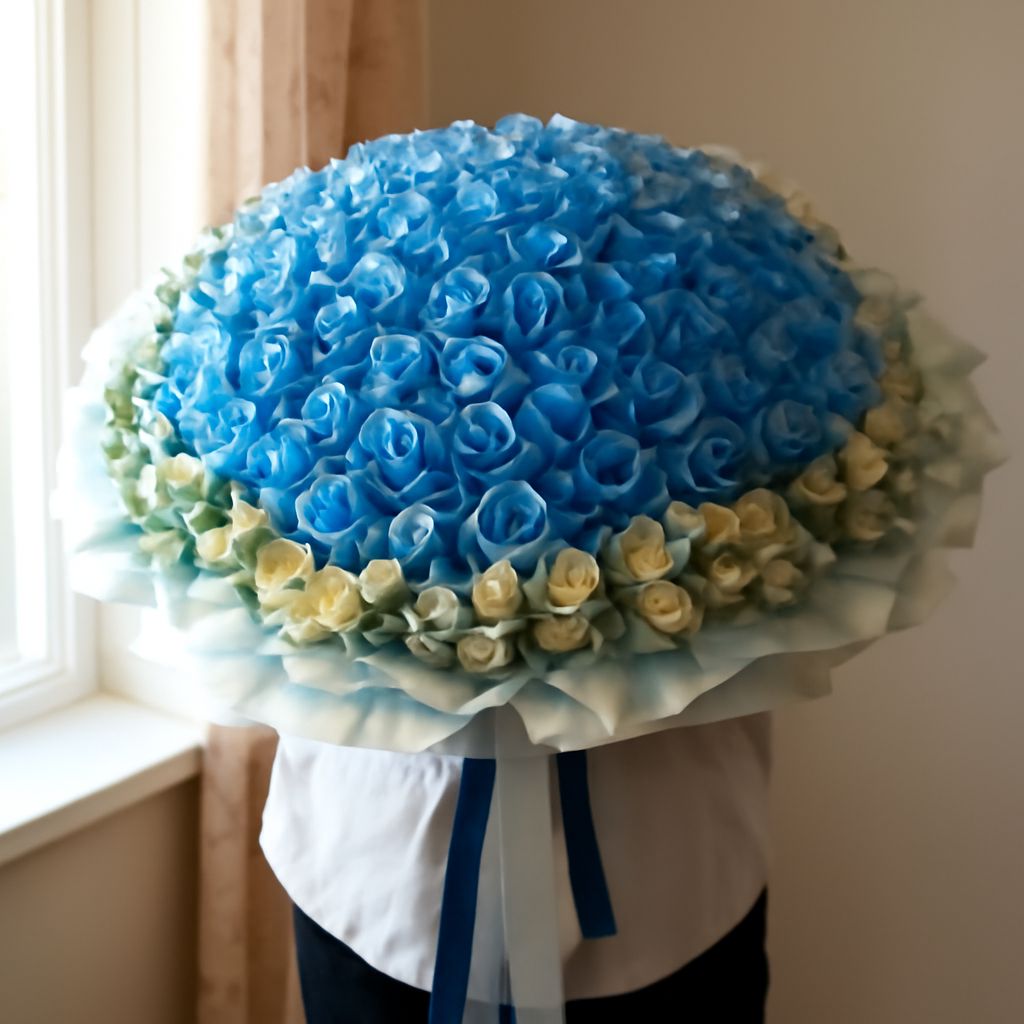
Blue flowers have long held a significant place in the world of art, captivating viewers with their serene beauty and rich symbolism. Whether depicted in a delicate still life or as part of an expansive landscape, blue flowers evoke a sense of tranquility and depth. This article delves into the meaning of blue flowers in art, exploring both their symbolic interpretations and historical significance.
Introduction to Blue Flowers in Art
In the realm of art, blue flowers often serve as more than mere aesthetic elements. They carry profound meanings and have been used by artists throughout history to convey emotions and concepts. Their unique color has been associated with various emotions, making them a favored choice for many painters and sculptors.
Symbolic Meanings of Blue Flowers
The symbolism of blue flowers varies, but they are generally associated with serenity, calmness, and introspection. They can represent hope, desire, and the unattainable, often symbolizing the quest for the divine or the infinite. For instance, the blue lotus is revered in Egyptian art as a symbol of rebirth and eternal life. In the language of flowers, blue blooms can also signify trust and loyalty.
Historical Context and Artistic Interpretations
Historically, blue flowers have been featured in many artistic movements, each lending its own interpretation. During the Romantic era, blue flowers symbolized the yearning for the unattainable and the pursuit of beauty amidst the mundane. Artists like Caspar David Friedrich used blue flowers to evoke a sense of longing and mystery.
In contrast, the Impressionists used blue flowers to capture fleeting moments of beauty and light. Claude Monet’s depictions of water lilies, often tinged with hues of blue, immerse viewers in a world of peace and reflection. The use of blue flowers in art has always mirrored the prevailing cultural and emotional landscapes of the time.
Blue Flowers in Modern Visual Culture
In contemporary visual culture, blue flowers continue to intrigue and inspire. They are prevalent in installations, digital art, and photography, symbolizing both the natural world and digital realms. Modern artists often use blue flowers to explore themes of identity, technology, and environmentalism.
The appeal of blue flowers in modern art also lies in their versatility. They can be used to create contrasts or harmonies within a composition, offering endless possibilities for artistic expression. Whether in street art or gallery installations, blue flowers maintain their symbolic richness while adapting to new artistic contexts.
Conclusion: Significance of Blue Flower Symbolism
The enduring fascination with blue flowers in art is a testament to their profound symbolism and aesthetic appeal. They continue to inspire artists across genres, connecting viewers to deeper emotions and universal themes. As symbols of peace, mystery, and the infinite, blue flowers remain a compelling subject in the ever-evolving tapestry of art.