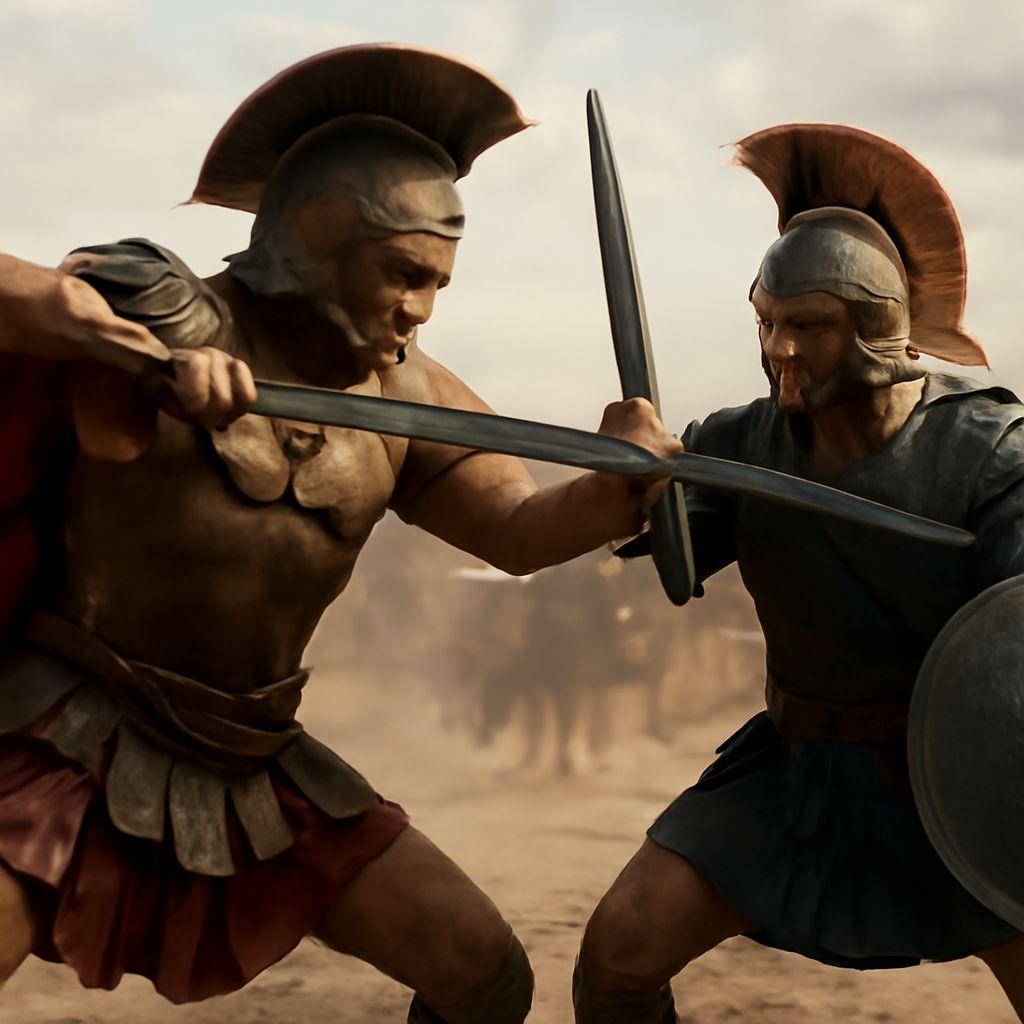
The figure of Achilles stands at the heart of both ancient myth and visual culture, his presence woven through centuries of art representing the Trojan War, the archetype of the heroic warrior, and the immortal pathos surrounding the death of Achilles. From archaic vase-paintings to Renaissance canvases, artists have returned to Achilles to capture the drama and ideals of heroism. This article explores the visual legacy of Achilles, considering how artists interpreted his role in the Trojan War, the attributes that define him as a warrior, and the enduring fascination with his demise.
Achilles in the Trojan War: Visual Representations
Achilles’ role in the Trojan War has sparked artistic imagination for centuries, with Greek vase painters of the sixth and fifth centuries BCE establishing many of the visual conventions that endure today. Early depictions on black-figure and red-figure pottery often focus on scenes from Homer’s Iliad: Achilles battling Hector, quarreling with Agamemnon, or brooding in his tent. These works prioritize narrative clarity, using posture, gesture, and accompanying figures to identify Achilles within the broader context of the Trojan War. For instance, the famous François Vase (c. 570 BCE) includes detailed friezes of battle and council, where Achilles is distinguished by his size, armor, and placement at the center of action.
Later, Roman sarcophagi and wall paintings amplify the emotional and psychological dimensions of Achilles’ story. Scenes such as the lamentation over Patroclus or the fateful duel with Hector appear with more expressive figures and dynamic compositions. These images aim to evoke not only the action but the tragedy and inner conflict that drive Achilles’ decisions. By the Renaissance, artists like Rubens and David would transform these narratives, emphasizing both the heroism and human vulnerability of Achilles within grand historical canvases.
Through these evolving visual forms, the image of Achilles in the Trojan War becomes a rich site for exploring ancient ideas about fate, glory, and mortality. His representation is rarely static—he is at turns the wrathful avenger, the grieving friend, and the warrior at the height of his power. This visual tradition invites viewers to engage with the complexity of Achilles’ character, as well as the collective memory of the Trojan War itself.
Iconography of Achilles as a Warrior
The iconography that defines Achilles as a warrior is remarkably consistent across the centuries, anchored by recurring symbols and attributes. Ancient artists typically depict him as a youthful, beardless figure of imposing stature, clad in a distinctive set of armor. His helmet, often crested and elaborately decorated, and his round shield are constant markers. Achilles’ armor itself, famously forged by Hephaestus in the Iliad, is rendered with special attention to detail—sometimes featuring mythological scenes or intricate patterns that set him apart from other fighters.
Another hallmark of Achilles warrior imagery is his dynamic posture. Rather than static or ceremonial, he is most often shown in motion: lunging, thrusting, or standing over a fallen opponent. This sense of energy communicates his prowess and the aura of near-invincibility attributed to him in myth. Artists use line, composition, and spatial emphasis to focus attention on Achilles’ physicality and martial skill, reinforcing his reputation as the Greeks’ greatest champion at Troy.
Beyond the battlefield, some visual traditions highlight his heroic nudity—a convention in Greek art associating ideal form with moral excellence and divine favor. However, in most combat scenes, the layering of armor, weapon, and shield serves as both practical and symbolic protection, underscoring his unique status among the Achaeans. The combination of youthfulness, strength, and distinctive weaponry in art not only identifies Achilles but expresses the ideals of heroism that he embodied for generations of viewers.
Depictions of the Death of Achilles in Art
The death of Achilles is one of antiquity’s most dramatic and recurrent themes, represented in media ranging from vase painting and sculpture to Renaissance and Baroque painting. According to later Greek and Roman tradition—not Homer—the fatal blow came from Paris, aided by Apollo, who struck Achilles in his only vulnerable spot: his heel. This moment, charged with tragedy and irony, is a favorite for visual storytelling.
In ancient vase painting, artists often condense the action to its narrative essentials. Achilles is shown at the ramparts of Troy, sometimes unaware of the arrow that will end his life, or, in later images, already wounded, surrounded by comrades or enemies. These compositions use gesture, gaze, and spatial arrangement to heighten the drama and sense of impending loss.
Renaissance and later artists reinterpret the death of Achilles with new emotion and grandeur. Paintings by Rubens, for example, focus on the moment of collapse: Achilles’ muscular body contorted by pain, his companions shocked or distraught, and the distant archer Paris depicted as both cowardly and fated. In sculpture and relief work, the scene often freezes the instant the arrow strikes the heel, offering viewers a meditation on vulnerability and the limits of human greatness.
Over time, the motif of Achilles’ death transitions from a cautionary tale to a broader symbol of heroism undone by fate. The visual echoes of this moment continue to shape perceptions of Achilles, not only as a warrior but as a figure marked by both glory and tragic inevitability.
Legacy of Achilles in Visual Culture
The legacy of Achilles in visual culture is enduring and transformative, influencing not just ancient and classical artists but also modern interpretations in literature, film, and digital media. His image serves as a touchstone for themes of heroism, mortality, and the search for eternal glory. Why does the story of Achilles still resonate so powerfully across cultures and eras? The answer lies in the flexibility of his myth and the richness of his iconography, which allow each generation to find new meaning in his story.
From neoclassical sculpture to contemporary graphic novels and cinema, Achilles continues to inspire reinterpretation. The iconic image of the warrior—dynamic, beautiful, and doomed—remains compelling, while the motif of the fatal heel speaks to universal anxieties about vulnerability and fate. Educational collections and museum exhibitions frequently place Achilles at the center of discussions about the ancient world’s values and aesthetics, showcasing how the visual representations of his life and death reflect shifting attitudes toward war, heroism, and human potential.
Ultimately, the visual record of Achilles’ role in the Trojan War, the construction of his warrior persona, and the evocative imagery of his death form a continuous thread through the fabric of Western art. Each artistic rendering—whether on a Greek krater or a modern film screen—invites viewers to revisit the enduring questions and emotions that make Achilles a timeless figure in the collective imagination.