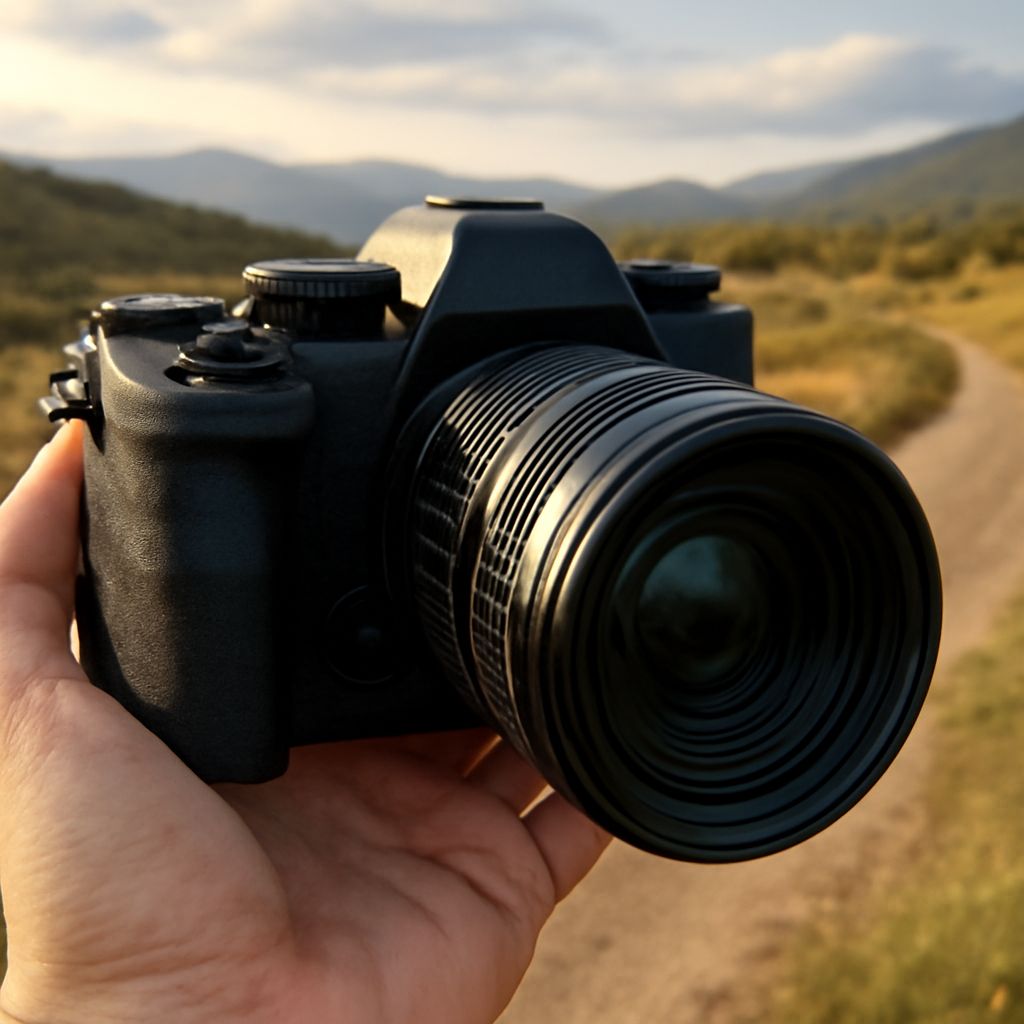
A market at dawn, a rain-soaked trail, a train window after dark: each asks something different of a camera. The best camera for travel is the one suited to the pictures a traveler wants and light enough to leave the hotel room.
Best Cameras for Travel: Three Ways to Pack
The best cameras for travel serve different kinds of days. A compact zoom fits the traveler who wants a single pocketable device; an interchangeable-lens camera permits a wider choice of lenses, at the cost of more space and decisions. The following examples are listed by their manufacturers in the United States, though stock can change.
For a small bag: Sony RX100 VII
The Sony RX100 VII has a built-in 24–200mm equivalent zoom: wide enough for a streetscape and long enough to isolate a detail across a square. “Equivalent” describes its angle of view relative to a full-frame camera, making different sensor formats easier to compare. A one-inch sensor and a lens opening from f/2.8 to f/4.5 make a versatile daylight package, but dim interiors and moving people may require a higher ISO, which can introduce noise.
Its lens cannot be swapped for a brighter one. It also lacks the security of a weather-sealed system, so a protective pouch is sensible when rain begins. A spare NP-BX1 battery and an SD card take little room; back up images each evening. This is a strong choice when the smallest kit that still reaches distant subjects matters most.
For changing subjects: Canon EOS R50
The Canon EOS R50 with RF-S 18–45mm lens suits a traveler moving between street scenes and portraits who wants room to add lenses later. The black body weighs about 13.2 ounces with battery and card; the lens weighs another 4.6 ounces. Its approximately 29–72mm equivalent range covers everyday scenes but reaches less far than the Sony.
The kit lens opens to f/4.5–6.3, so a brighter compatible lens can help with indoor portraits; its larger opening lets in more light. That second lens also adds bulk. Canon lists no weather-resistant construction for the kit lens: use a rain cover or put the kit away in wet weather. Carry a spare LP-E17 battery and SD card. For someone who values lens choice over pocket size, this may be the best travel camera of the three.
For wet trails: OM SYSTEM OM-5 Mark II
The OM-5 Mark II is a mirrorless camera suited to walking in unsettled weather. Its body weighs about 14.7 ounces with battery and card. Paired with the M.Zuiko 12–45mm F4 PRO, which adds about 9 ounces, it covers a 24–90mm equivalent range. The wide end takes in a landscape; the longer end frames a person within it.
The body is rated IP53, but protection depends on the lens as well: OM SYSTEM lists the 12–45mm lens at IPX1, so the combination should be treated according to the lower rating. Neither rating means the kit can be submerged. Stabilization helps with camera shake for stationary subjects in low light, but a moving person still needs a fast enough shutter speed. Bring a spare BLS-50 battery, SD cards, and a dry bag.
Make the kit work after sunset
The right travel setup for a day of walking may need help at dinner: brace it, raise ISO, or choose a brighter lens where the system allows. Stabilization steadies camera movement, while a larger aperture admits more light; neither freezes a moving subject. Check that the charger works with the destination’s outlets, keep a backup separate from the cards, and budget space for the whole kit rather than the body alone.
The strongest choice is the camera kit that can stay with the photographer through the day’s most demanding scene.