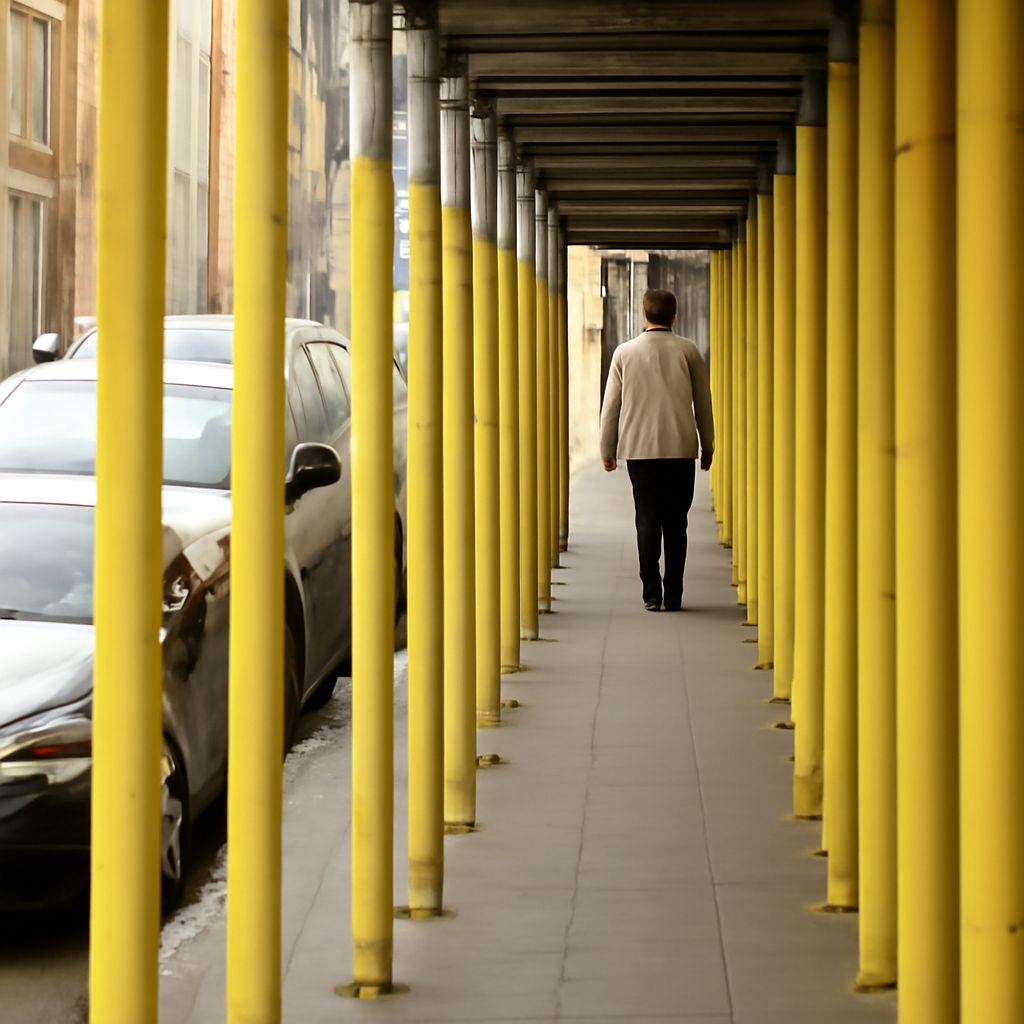
The purpose of composition in art is to organize attention and relationships. Artists decide where to place subjects, how large they should appear, and how lines, shapes, colors, light, and empty space interact. These choices determine what viewers notice first, what they connect, and how they move through the image.
Composition does not merely make an image look balanced. It establishes a visual route and gives each element a role. Leading lines create direction, while form in art gives subjects volume, weight, and spatial importance. Together, they can turn a collection of objects into a clear visual argument.
What Is the Purpose of Composition in Art?
Composition commonly organizes attention and relationships. It creates hierarchy by making one element dominant and others supportive. Size, contrast, placement, detail, and isolation can all establish that order. A brightly lit face near the center of a dark painting will usually attract attention before a low-contrast background object.
Composition also explains how elements belong together. Overlapping shapes can indicate depth; repeated colors can connect distant objects; and negative space can separate a subject from competing details. In Leonardo da Vinci’s The Last Supper, the architecture and table establish a stable framework, while converging lines and the central placement of Christ organize the scene around him.
Balance is another compositional tool, but it does not always mean symmetry. A large dark object on one side may be balanced by several smaller, brighter objects on the other. An off-center subject can create tension, movement, or anticipation. The arrangement supports the image’s intent, whether that intent is calm observation, drama, hierarchy, or motion.
How Leading Lines Guide the Eye
Leading lines are visual paths that direct the viewer toward, through, or away from an image. They may be literal, such as roads, rails, fences, architectural edges, or horizon lines. They may also be implied by a pointing arm, a gaze, a row of figures, or a sequence of repeated shapes.
A road narrowing toward a distant mountain pulls the eye from the foreground into depth. In a photograph, that route can make the mountain feel like the destination and the foreground feel like an invitation to enter the scene. A diagonal staircase can produce a faster, more energetic reading than a horizontal platform, while vertical columns can make a building feel stable and monumental.
Leading lines do not force every viewer to follow one identical route. They establish a likely first movement, after which contrast, faces, color, and detail may redirect attention. A bright subject placed across a road’s path can interrupt the line and become the image’s focal point. Strong compositions use this interaction deliberately rather than allowing every edge to compete.
Lines can also organize attention without ending at the main subject. Arched branches may frame a figure, while a shoreline can lead toward a small boat and then continue across the image. The line’s direction, thickness, contrast, and position all affect its strength.
How Form in Art Creates Volume and Emphasis
Form differs from flat shape. A shape is a two-dimensional area defined by an outline, such as a circle or silhouette. Form suggests three-dimensional volume: a sphere rather than a circle, a cylinder rather than a rectangle, or a body that occupies space rather than a flat contour.
Artists create form through contour, shading, highlights, cast shadows, overlap, perspective, and material detail. A softly shaded sphere appears rounded because the tones describe its turning surface. A hard-edged shadow beneath it anchors that volume to a ground plane. In sculpture, actual mass, depth, and negative spaces make form physically present; in painting and photography, those qualities are usually constructed through visual cues.
Form creates emphasis by giving an object weight and presence. A large carved figure in the foreground can dominate a scene even without bright color. In a portrait, directional light across the cheek, nose, and jaw can make the face feel dimensional and guide attention toward its features. In product or still-life photography, placing a rounded vessel in front of flatter objects establishes depth and makes the vessel the visual anchor.
Form also creates hierarchy through scale and overlap. A nearer object appears larger and more substantial, while partially hidden forms recede. Rounded forms often attract attention because light changes across their surfaces, producing tonal variety that a flat shape lacks.
Reading Line and Form Together in Art and Photography
Line and form work together when a visual path leads to a volumetric subject. Consider a photograph of a pier: the parallel boards form leading lines that narrow toward a person at the end. The person’s three-dimensional body, strengthened by side light and a cast shadow, becomes more prominent than the flat surface of the pier. Line establishes the route; form supplies the destination.
The same relationship appears in painting. In a landscape, a winding river can guide the eye through several depth zones before reaching a rounded hill or illuminated building. The river controls movement across the picture, while the hill or building gains emphasis through mass, light, and overlap.
When revising a composition, trace the likely path from the first focal point to the next. Check whether edges, repeated objects, and contrasts support that route. Then examine whether the important subjects have enough volume, separation, and spatial weight to hold attention. If lines point in conflicting directions or every form has equal emphasis, the image may feel scattered. A clearer arrangement lets direction and volume reinforce the same visual priority.