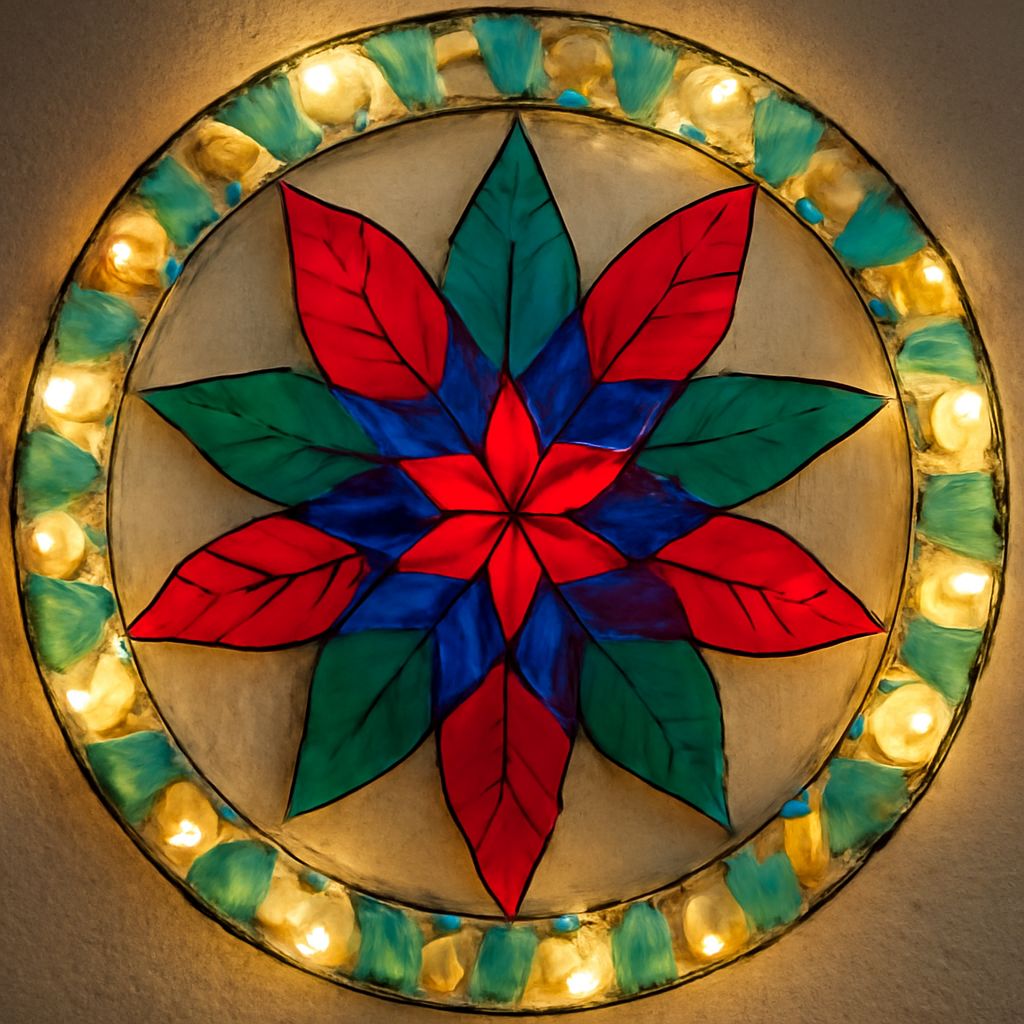
The Filipino parol is far more than a decorative Christmas lantern; it is a powerful expression of Filipino ingenuity, faith, and communal spirit. With its vibrant colors and star-shaped silhouette, the parol illuminates streets, homes, and public spaces across the Philippines from early December through January, marking one of the country’s most cherished holiday traditions. Its enduring appeal lies not only in its luminous beauty but in its deep-rooted significance within Philippine visual culture.
What Is a Filipino Parol?
A Filipino parol is a traditional ornamental lantern, most commonly fashioned in a five-pointed star shape and crafted from bamboo and paper or capiz shells. While its most recognizable form is the symmetrical star, parols now appear in a diversity of shapes and sizes, ranging from small hand-held lanterns to large, elaborate installations for public displays. Despite these variations, the classic star motif remains a unifying symbol.
The word “parol” comes from the Spanish “farol,” meaning lantern, reflecting the country’s colonial past. Today, the parol is uniquely Filipino, distinguished by vibrant colors, intricate cut-outs, and decorative tassels. It is typically illuminated from within by a candle, light bulb, or LED. During the Christmas season, Filipino parols adorn windows, gates, churches, and plazas, visually connecting families, neighborhoods, and cities through a shared cultural heritage.
Beyond its festive function, the Filipino parol embodies themes of hope, unity, and resilience. Whether simple or ornate, parols carry a sense of nostalgia, pride, and community for Filipinos both in the Philippines and abroad.
History and Evolution of the Philippine Parol
The Philippine parol traces its origins to the Spanish colonial era in the Philippines, which began in the 16th century. Inspired by the Mexican tradition of the “farolito” and the Spanish “farol,” early parols were used to light the way for nightly processions (known as “Panunulúyan” or the reenactment of Mary and Joseph’s search for lodging) during the nine-day Christmas novena masses called Simbang Gabi.
Initially, parols were simple—constructed with bamboo frames and covered with white Japanese rice paper. As the tradition spread, regional variations emerged, and the materials and designs became more elaborate. By the early 20th century, colored cellophane, crepe paper, and later, capiz shells (the translucent shells of the windowpane oyster) had become popular materials.
Today, the production and display of parols have evolved into a major folk art and competitive showcase. Nowhere is this more evident than in San Fernando, Pampanga, dubbed the “Christmas Capital of the Philippines,” where the Giant Lantern Festival (Ligligan Parul) features massive, motorized parols—some reaching over 20 feet in diameter and illuminated by thousands of synchronized lights.
Modern parols now incorporate LED technology, steel frames, and programmable lighting patterns. Despite these innovations, the essential spirit of the parol—its role as a beacon of communal celebration and hope—remains unchanged.
Symbolism and Significance in Filipino Culture
The Filipino parol is rich in symbolism, most notably representing the Star of Bethlehem that guided the Three Wise Men to the newborn Jesus. Serving as a visual metaphor for light in the darkness and the arrival of hope, the parol reflects the deep Christian faith that shapes many aspects of Filipino identity.
Its use during the Christmas season is both spiritual and secular. For many families, hanging a parol is an act of devotion, gratitude, and renewal. The lantern also signifies the Filipino value of bayanihan, or communal unity, as neighborhoods gather to create and display their own lantern designs. Parol-making contests, workshops, and community projects reinforce bonds, transmit traditional skills, and foster creative self-expression.
In the diaspora, the parol has become a potent symbol of Filipino heritage. Overseas communities organize parol festivals and lantern-making activities, sharing Filipino customs and artistic traditions with younger generations and the world. For many, the annual display of the Philippine parol is a way to reconnect with family roots and to keep the spirit of home alive across distances.
Beyond Christmas, the parol occasionally appears in secular or national celebrations as an emblem of optimism and resilience, testifying to its enduring presence in Philippine visual language.
Artistry and Craftsmanship: How Parols Are Made
Creating a traditional Filipino parol is an exercise in patience, creativity, and collaboration. While contemporary parols can be manufactured, the most valued parols are those handcrafted by artisans or families using time-honored methods.
The process begins with building a sturdy frame, typically using lightweight bamboo sticks tied together to form a five-pointed star. Artisans then attach crossbars to reinforce the structure. The star is covered with colored paper, Japanese rice paper, or capiz shells, carefully glued or fastened to the bamboo skeleton. Next, decorative elements such as fringes, cut-outs, and multi-layered designs are added, each requiring precision and a steady hand.
Illumination is central to the parol’s magic. Traditional models used small candles, which lent a warm, flickering light but required careful monitoring. Today, most parols use electric bulbs or LEDs, providing greater safety and allowing for more complex lighting effects. In festival settings, entire teams synchronize intricate displays using wiring and control boards, transforming parols into dazzling kinetic sculptures.
Parol-making is widely taught in schools and community centers, especially in the lead-up to Christmas. Whether crafted from simple recycled materials or featuring elaborate capiz mosaics and programmable lights, each parol is a unique contribution to the living Filipino tradition—a handmade symbol of hope, artistry, and shared celebration.