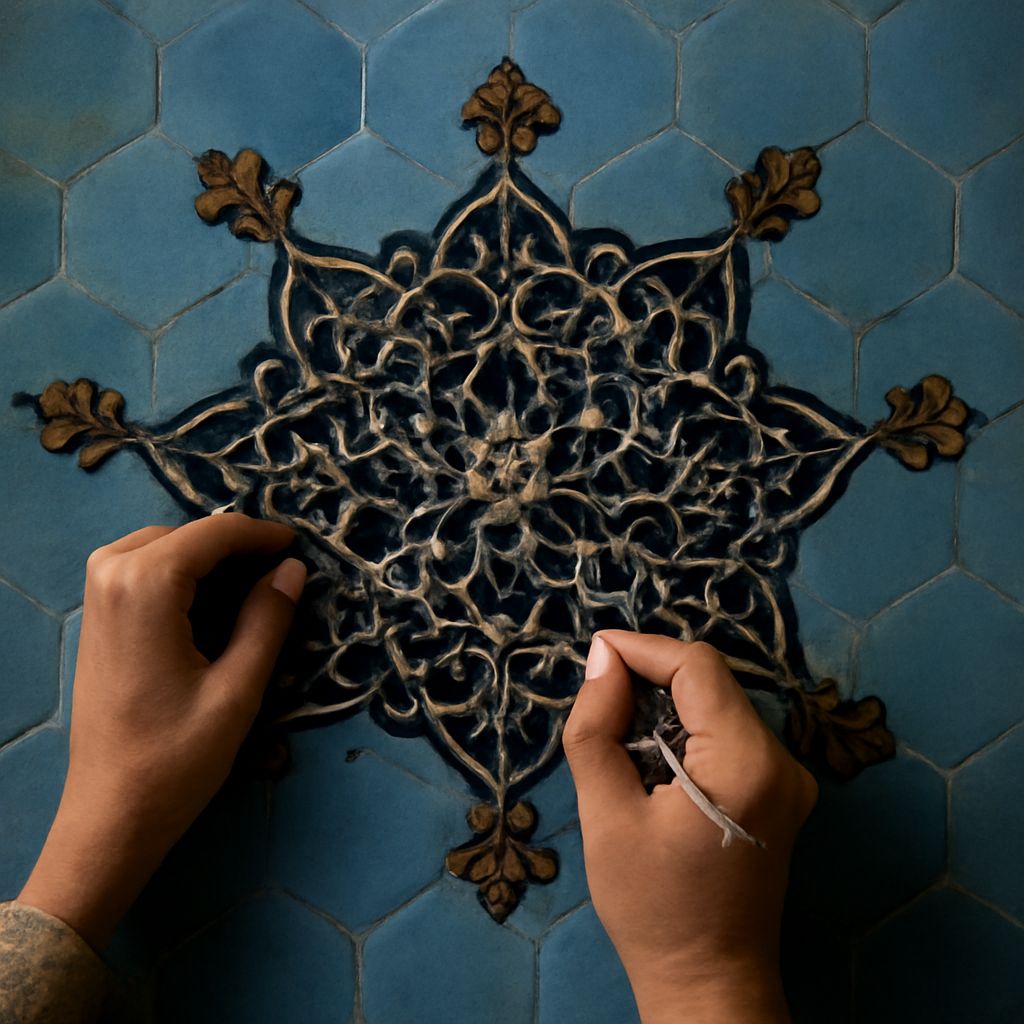
Arab art is a tapestry of visual, decorative, and architectural practices that have evolved across centuries and regions, reflecting the cultural, religious, and historical complexities of the Arab world. Characterized by intricate geometric patterns, calligraphy, arabesque motifs, and a focus on non-figurative expression, arab art embodies both continuity and innovation from North Africa through the Arabian Peninsula. Today, the legacy of these traditions shapes not only regional aesthetics but also influences contemporary global culture.
What Defines Arab Art?
Arab art is best recognized for its distinctive use of abstraction, geometry, and calligraphy. Unlike Western traditions that often center on representational forms and human figures, arab art developed an artistic vocabulary deeply influenced by Islamic teachings, which historically discouraged the depiction of sentient beings, especially in religious contexts. This gave rise to a focus on patterns and motifs that symbolize infinity, unity, and the divine.
Geometric designs are central, appearing in mosaics, textiles, woodwork, and architectural facades. The complexity of these patterns reflects mathematical precision and spiritual ideals. Arabesques—intertwined, flowing curves derived from vegetal forms—decorate ceramics, manuscripts, and buildings, serving both an ornamental and meditative function.
Calligraphy holds a unique position in arab art, functioning as both a visual art form and a sacred expression. The rendering of Quranic verses, poetry, or proverbs elevates the written word into decorative excellence. Kufic and Naskh scripts are two of the most prevalent calligraphic styles, their rhythm and form echoing spiritual devotion and artistic discipline.
Color palettes in arabian art often feature bold contrasts: deep blues and turquoises, warm earth tones, shimmering golds, and crisp whites. These choices are not random but are instead imbued with symbolic meaning, referencing the landscapes and cosmologies of the Arab world.
A Brief History of Arab Artistic Traditions
The roots of arab art reach back to pre-Islamic civilizations, such as the Nabataeans and ancient South Arabians, whose rock reliefs, pottery, and architecture reveal stylistic continuities with later developments. However, it was with the rise of Islam in the 7th century that a truly distinctive arabian art identity emerged, blending regional influences and new religious imperatives.
The Umayyad (661–750 CE) and Abbasid (750–1258 CE) caliphates marked a golden age for arab art, with monumental projects like the Dome of the Rock in Jerusalem and the Great Mosque of Damascus. These structures showcase the synthesis of Byzantine, Sassanian, and indigenous motifs, establishing the archetype for Islamic architecture and decoration. Palaces, mosques, and caravanserais were adorned with tessellated tiles, stucco reliefs, and ornate mihrabs.
During the medieval period, centers such as Cairo, Baghdad, and Cordoba became vibrant hubs of artistic production, where arabian art flourished in manuscript illumination, metalwork, glassmaking, and textiles. The spread of the Islamic empire facilitated exchanges with Persian, Indian, and even European artisans, resulting in hybrid styles and new techniques.
By the time of the Ottoman and Mamluk dynasties, arab art incorporated more figurative elements in secular contexts, while continuing to refine the traditions of pattern, color, and calligraphy. Architectural marvels like the Alhambra in Granada and the Sultan Hassan Mosque in Cairo remain enduring symbols of this achievement.
Influences Shaping Arabian Art
Arabian art has always been porous, absorbing and transforming influences from neighboring cultures and trade networks. Early interactions with Byzantium and Persia introduced new materials, motifs, and aesthetic concepts. For example, the adaptation of the Sassanid palmette motif and Byzantine mosaic techniques can be seen throughout early Islamic art.
Contact with Central Asia and the Indian subcontinent during the medieval period introduced arab artists to new dyeing methods, ceramic glazes, and textile patterns. The Silk Road facilitated the flow of both luxury goods and artistic ideas, as Arabic script and ornamental devices appeared on Chinese ceramics and Persian miniatures.
In North Africa and Al-Andalus (Islamic Spain), arabian art incorporated Berber, Roman, and Visigothic elements, resulting in an eclectic blend visible in the horseshoe arches and muqarnas vaulting of the Great Mosque of Cordoba. North African zellij tilework and stucco carving reveal the enduring importance of geometry and local color sensibilities.
The Ottoman era intensified the cross-pollination of styles, particularly in architecture and manuscript art. However, local tastes continued to assert themselves, ensuring that arab art remained a living, adaptive tradition rather than a static heritage.
Modern Expressions and Contemporary Artists
Today, arab art is undergoing a powerful renaissance, as artists reinterpret tradition in light of contemporary realities. The 20th and 21st centuries have witnessed the emergence of modernist movements in cities like Cairo, Beirut, and Baghdad, where painters and sculptors blend calligraphy, abstraction, and symbolism with global art languages.
Key figures such as Dia Azzawi, Etel Adnan, and Shirin Neshat explore identity, memory, and politics through forms that merge arabian art heritage with modern themes. Calligraffiti—a fusion of traditional calligraphy and street art—emerged in the 2000s, exemplified by artists like eL Seed and Hassan Massoudy. Their work brings a dynamic, urban energy to walls and public spaces from Dubai to Paris.
Institutions like Mathaf: Arab Museum of Modern Art in Doha and the Barjeel Art Foundation in Sharjah have played pivotal roles in supporting and showcasing contemporary arab artists. Biennials and international exhibitions further amplify these voices, situating arab art within global dialogues on migration, revolution, and belonging.
Whether in painting, installation, video, or digital media, today’s practitioners honor the essence of arab art while questioning boundaries and forging new visual languages. This creative tension between continuity and change invites viewers to reconsider what arabian art can be in the modern era.