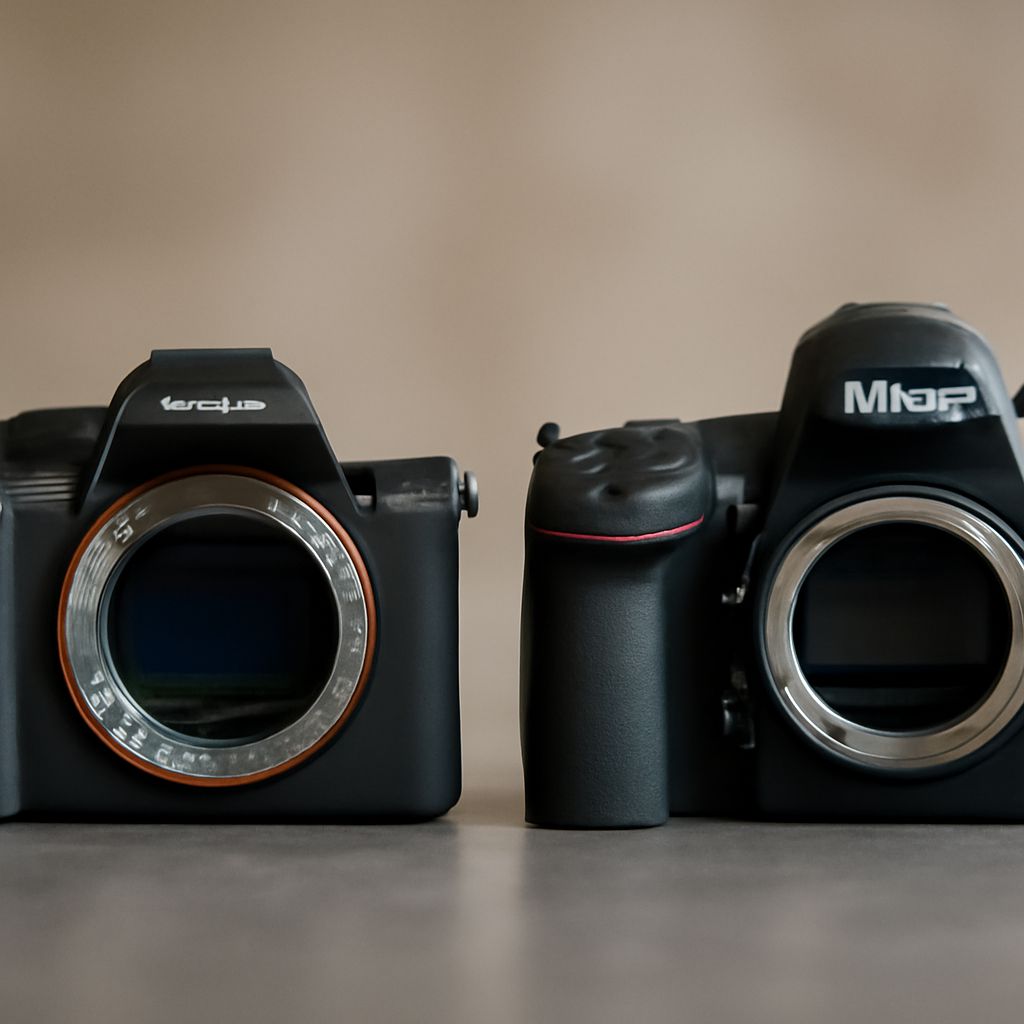
What is a DSLR? A DSLR (digital single-lens reflex) is a digital camera that uses a movable mirror to send light either to an optical viewfinder or the imaging sensor. It gives you a direct, real-time view through the lens while the mirror and shutter coordinate each exposure.
For photographers choosing a system, the practical divide is straightforward: DSLRs prioritize optical viewing, long battery endurance, and mature lens ranges; mirrorless cameras prioritize compact bodies, live exposure previews, advanced autofocus, and video.
What Is a DSLR? Mirror, Optical Viewfinder, and Autofocus
The Mirror, Optical Viewfinder, and Autofocus Path
Light enters through the lens and reaches the main mirror at an angle. The mirror reflects most of it upward to a focusing screen, prism, and optical viewfinder, so the scene appears without an electronic display. A smaller secondary mirror directs part of the light to a dedicated phase-detection autofocus module below the mirror. That module measures whether rays converge and tells the lens how far, and in which direction, to move.
What Happens When You Press the Shutter
When you half-press the shutter, the DSLR’s autofocus system can focus while the mirror remains down. When you press fully, the mirror flips upward, the shutter opens, and light reaches the sensor for the selected exposure. The viewfinder briefly blacks out because the mirror is no longer reflecting light. It then returns so you can compose the next frame. In live view or video, the mirror stays raised and the camera generally uses the imaging sensor’s autofocus instead.
What Is a DSLR Camera? How Mirrorless Changes the Design
Sensor-to-EVF Preview and the Moving-Mirror Difference
A mirrorless camera removes the reflex mirror, optical focusing module, and usually the prism. Light travels directly through the lens to the imaging sensor. The sensor feeds either the rear screen or an electronic viewfinder (EVF), which is a small display showing a processed view of the scene.
This changes the preview: an EVF can show likely brightness, white balance, depth of field, focus area, and sometimes a histogram before you shoot. It can also introduce display lag, noise in dim scenes, or higher power use. The key mechanical difference is that a mirrorless camera has no mirror to lift for each exposure, while a DSLR has an optical path interrupted by that moving mirror.
Difference Between Mirrorless and DSLR: Compare Both by the Same Criteria
Size, Preview, and Battery Life
A DSLR body is often larger and heavier because it must house a mirror box, prism, and separate autofocus module. That can make a substantial grip and long-lens balance comfortable, but it adds weight in a travel bag. Mirrorless bodies are often smaller, though a bright EVF, large battery, or professional controls can narrow the gap. Neither category is automatically small once lenses are included.
An optical viewfinder provides an unprocessed, lag-free view and does not consume sensor-display power. An EVF previews exposure and color, which is useful in changing light, but the screen and sensor remain active. As a result, DSLRs commonly deliver more shots per charge. Actual battery life depends on viewfinder use, live view, temperature, and battery capacity.
Autofocus, Video, and Lens Ecosystems
Through the optical viewfinder, DSLR phase-detection autofocus is fast and predictable for still subjects and action, but coverage and subject recognition vary by model. Mirrorless autofocus works on the imaging sensor, allowing broad-area focusing, face and eye detection, and subject tracking on many current bodies. For fast action, compare tracking consistency and blackout behavior rather than assuming one category always wins.
Mirrorless usually has the cleaner video design: continuous sensor-based autofocus, EVF or screen preview, and no mirror movement. DSLRs can produce excellent video, but older models may offer slower live-view autofocus, less tracking, or fewer recording tools.
DSLR lens libraries are extensive, with many affordable used options. Mirrorless mounts often have newer lens designs and short flange distances that make compact or specialized lenses easier to build. Adapters can let a mirrorless body use some DSLR lenses, but autofocus speed, stabilization, or electronic communication may change.
Which System Fits Each Photographer?
Stills and Action: Handling, Tracking, and Battery Priorities
For general still photography, choose DSLR if optical viewing, long battery life, and a comfortable larger body matter more than compact carrying. It suits photographers who already work quickly through an optical finder and do not need extensive subject detection. Choose mirrorless for silent shooting options, eye and subject tracking, broad autofocus coverage, and a live exposure preview. For action, prioritize tested tracking, burst buffer, blackout, and telephoto balance; the label alone does not determine results.
Travel and Video: Size, Preview, and Recording Priorities
For travel, mirrorless often wins when every gram and live preview count; pair it with compact lenses. A DSLR may be the better value if weight is acceptable and a large used lens selection matters. For video, start with mirrorless if continuous autofocus, EVF or screen monitoring, and modern recording features are central. Choose DSLR for occasional clips when its live-view performance meets your needs.
Existing Lenses: When the Mount and Adapter Decide
Existing lenses can settle the decision. If you own several compatible DSLR lenses and are satisfied with the body, staying with that mount avoids replacement costs. Moving to mirrorless may make sense if an adapter preserves the lenses you rely on and the new body’s autofocus and stabilization meet your needs. If you are starting fresh, compare the complete system—body, two or three likely lenses, batteries, and support—not body size alone.