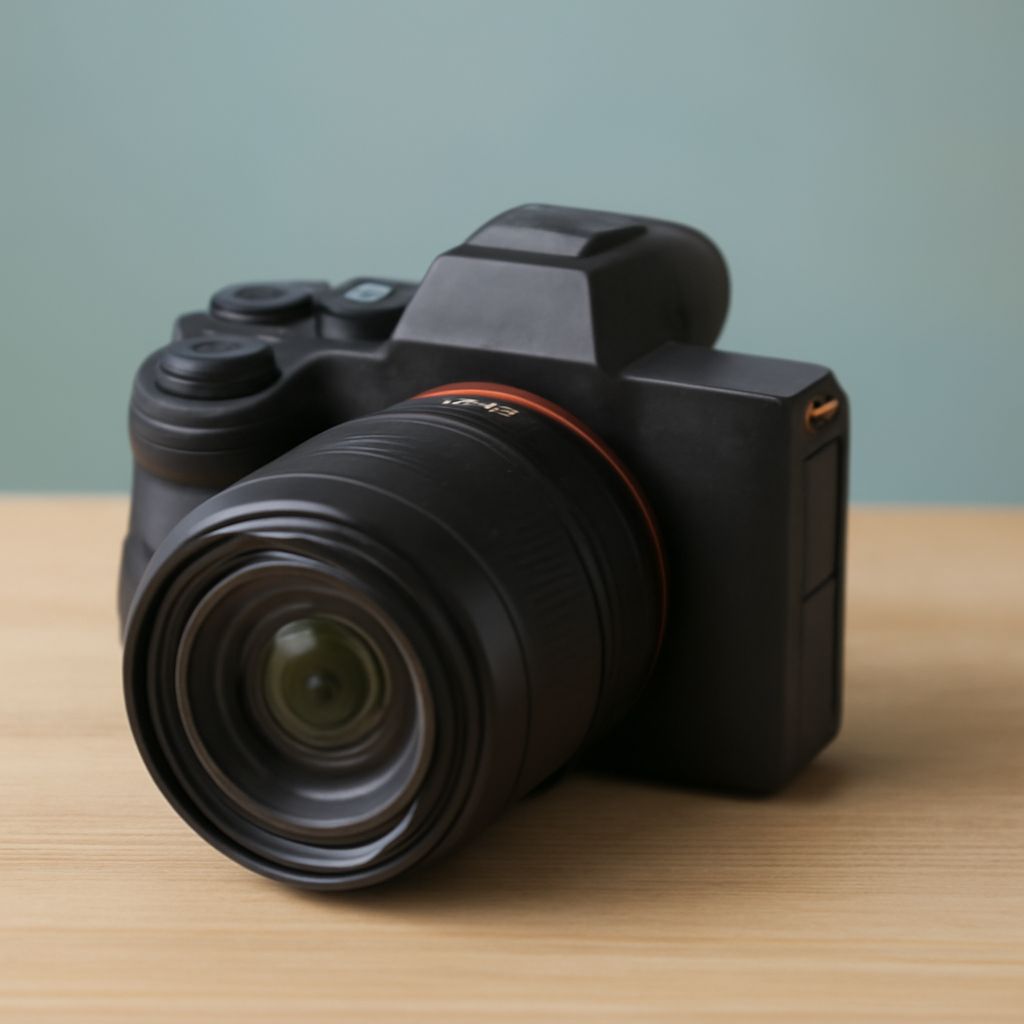
Camera types are easiest to understand by how they show the scene, accept lenses, and record light. A DSLR (digital single-lens reflex) uses a movable mirror and optical viewfinder; a mirrorless camera removes that mirror and sends the sensor feed to an electronic viewfinder or rear screen.
These systems are not the only choices. Compact, bridge, action, and medium-format cameras occupy different points on the same spectrum of lens flexibility, sensor size, portability, speed, and intended use.
Camera Types by Viewing Mechanism, Lens, and Sensor
The viewing mechanism is the main distinction between DSLR and mirrorless cameras. In a DSLR, light enters through the lens, reflects off a mirror, and travels through a prism to the optical viewfinder. In a mirrorless design, light reaches the imaging sensor continuously, and the camera displays a digital preview on an electronic viewfinder or screen.
Lens design creates another important division. Interchangeable-lens cameras accept different lenses for wide-angle, telephoto, macro, portrait, or low-light work. Fixed-lens cameras keep the lens permanently attached, trading flexibility for a smaller kit, simpler operation, or a long built-in zoom.
Sensor format is a separate factor. Common formats include Micro Four Thirds, APS-C, full frame, and medium format. A larger sensor can provide more control over background blur and may capture more detail or dynamic range, but it usually increases camera and lens size. Format does not determine whether a camera is DSLR or mirrorless.
DSLR Camera Meaning: How the Mirror Works
DSLR camera meaning refers to “digital single-lens reflex”: a digital camera that uses one lens for both composing and taking the photograph, with a reflex mirror directing light to an optical viewfinder.
Before exposure, the mirror sits in the light path. When you press the shutter, it flips upward so light can reach the sensor, the shutter opens, and the image is recorded. This gives the optical viewfinder a direct, real-time view through the lens, without an electronic display between the scene and your eye.
DSLRs are typically interchangeable-lens cameras. Their strengths can include long battery life, a familiar optical viewing experience, and extensive lens selections, including telephoto options. The mirror and prism add bulk, and the viewfinder cannot show the sensor’s final exposure or white-balance preview in the same way an electronic viewfinder can.
What Is a Mirrorless Camera?
What is a mirrorless camera? It is an interchangeable-lens digital camera that has no reflex mirror or optical prism. The imaging sensor remains exposed to light while you compose, feeding a live image to the electronic viewfinder or rear display.
Removing the mirror allows a shorter distance between the lens mount and sensor. Bodies can therefore be smaller, although professional controls, large batteries, cooling systems, and bright viewfinders can make some mirrorless cameras substantial. Lens size still depends heavily on sensor format and aperture, so a small body does not always mean a small complete kit.
An electronic viewfinder can preview exposure, color, depth of field, focus peaking, and a monochrome picture style before capture. Mirrorless cameras can also offer fast subject detection, silent shooting, and strong video features. Their trade-offs may include higher electronic power consumption and a viewing experience that depends on a screen rather than a direct optical path.
Other Common Camera Categories
Compact cameras use a fixed lens and usually prioritize low weight and straightforward operation. They suit travel, everyday snapshots, and situations where carrying interchangeable lenses would be inconvenient. Their smaller sensors often limit extreme low-light performance and background separation compared with larger interchangeable-lens systems.
Bridge cameras also have fixed lenses, but their built-in zoom ranges can extend from wide angle to substantial telephoto. They offer a DSLR-style grip and controls without requiring a separate lens collection. They are useful for wildlife at a distance, travel, and general-purpose shooting when portability matters more than maximum image quality.
Action cameras are compact, rugged, and designed for movement. Wide lenses, strong stabilization, weather resistance, and hands-free mounting are more important here than interchangeable lenses or a large sensor. They work well for cycling, skiing, water sports, and point-of-view footage.
Medium-format cameras use sensors larger than full frame and are commonly chosen for high-resolution commercial, studio, fashion, and landscape work. They can produce exceptional detail and tonal subtlety, but bodies and lenses are generally less portable and more specialized.
Choose a Camera Type by Use Case
- Travel and daily carry: Choose a compact camera, a small mirrorless kit, or a bridge camera according to whether pocketability, lens flexibility, or zoom reach matters most.
- Sports and wildlife: An interchangeable-lens DSLR or mirrorless camera with a suitable telephoto lens provides the reach and autofocus control required. Compare tracking performance, handling, and battery needs.
- Video and hybrid work: Mirrorless cameras commonly provide an efficient combination of electronic monitoring, continuous autofocus, and video controls. Select based on recording requirements, stabilization, heat management, and lens options.
- Studio, portraits, and landscapes: DSLR or mirrorless systems cover a wide range of needs, while medium format becomes relevant when maximum resolution and tonal detail justify a larger, more specialized setup.
- Adventure and hands-free recording: An action camera is usually more practical than a larger interchangeable-lens body because mounting, stabilization, and ruggedness take priority.