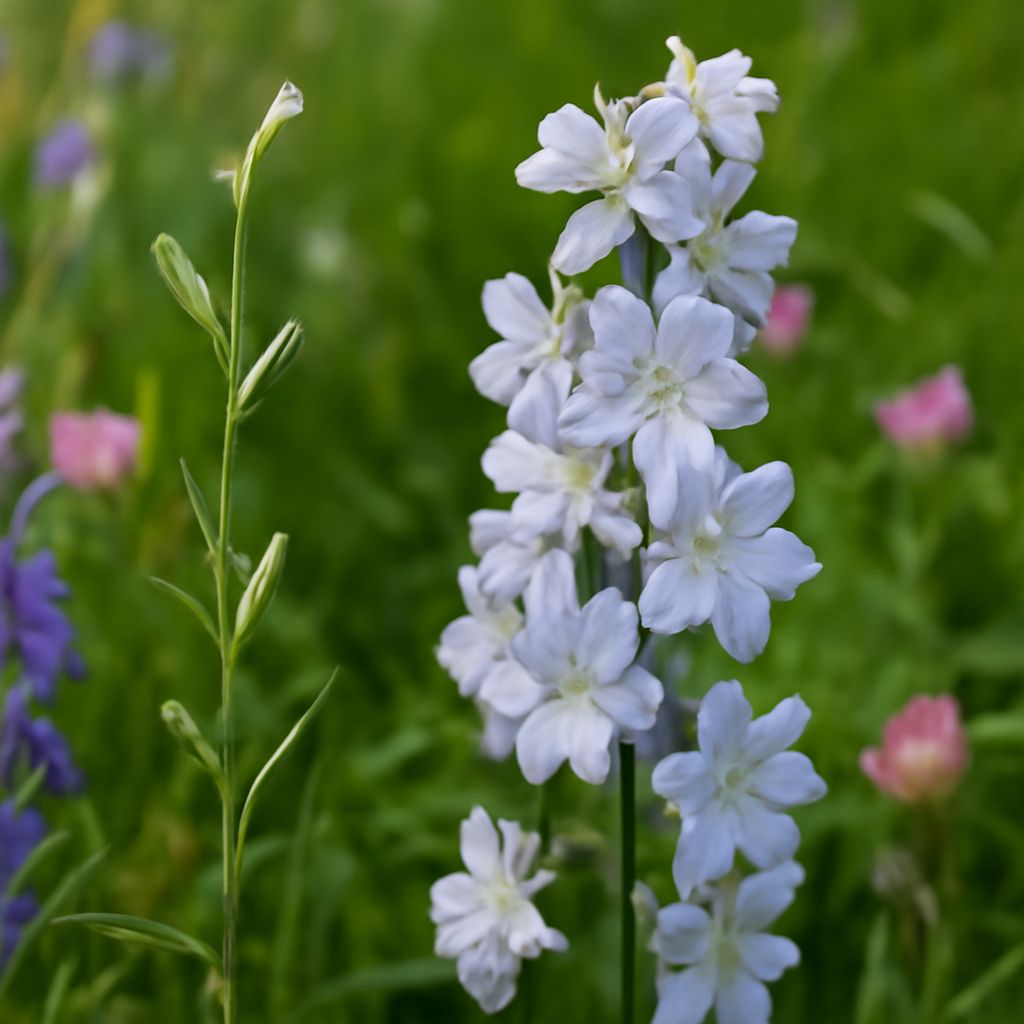
The larkspur flower, with its tall spikes and vibrant hues, has long captured attention for more than just its ornamental beauty. Steeped in folklore, artistry, and the language of flowers, the larkspur carries a web of meanings that shift subtly by culture, context, and color. Whether encountered in a summer bouquet, a classic painting, or as a motif in design, larkspur communicates messages of openness, positivity, and emotional depth. Understanding larkspur flower meaning and larkspur symbolism reveals not only its visual appeal but also the hidden messages it can send in art, ritual, and personal expression.
What Is the Meaning of the Larkspur Flower?
Larkspur, botanically known as Delphinium, is most commonly associated with an open heart and ardent attachment. Its name is thought to derive from the spur-shaped nectar pouch at the base of each bloom, reminiscent of a lark’s claw. In the Victorian language of flowers, larkspur signified strong bonds of love, a carefree spirit, and lightness of being. This made it a favored inclusion in bouquets meant to express affection or to convey goodwill between friends and lovers.
Beyond relationships, the larkspur flower meaning extends to general positivity and renewal. It is often seen as a symbol of joy in life’s journey, encouragement in new pursuits, and a sign of protection against negative influences. Some traditions even associate larkspur with the dispelling of shadows—both literal and metaphorical—making it a talisman for hope and clarity.
Larkspur is also the birth flower for July, adding another layer to its celebratory reputation. Those born in this month might receive larkspur as a token of encouragement or a wish for happiness and success. The flower’s upright growth and striking presence mirror its association with reaching upward, striving, and embracing growth.
Altogether, larkspur communicates messages of openness to new experiences, sincerity in emotions, and the beauty of genuine connection. Its symbolism can be both deeply personal and universally positive, making it a versatile choice for conveying heartfelt sentiment.
Larkspur Symbolism Across Cultures
Larkspur symbolism has evolved across centuries and continents, taking on unique shades in different traditions. In ancient Greek mythology, larkspur was linked to stories of transformation and remembrance. One legend ties the flower to the tale of Ajax, whose death in battle was said to have inspired the gods to create the larkspur from his spilled blood—its delicate petals marked with his initials as a tribute to valor and loss.
In European folklore, larkspur was often thought to guard against evil or misfortune. People would plant it around homes and stables or wear sprigs as amulets, believing the flower’s distinctive form repelled ghosts, witches, and negative spirits. This protective theme appears in both rural superstitions and more formal rituals, especially during midsummer celebrations.
In North American traditions, larkspur’s symbolism leans more toward openness, joy, and the celebration of life’s fleeting moments. Native American uses of larkspur included dye production and, in some cases, medicinal applications—though the plant is toxic and should not be consumed. Its spikes of blue or purple in the wild became a visual metaphor for the sky, introspection, or spiritual ascent.
These diverse cultural meanings enrich larkspur’s visual language: as a flower, it bridges themes of memory, protection, celebration, and reaching beyond the ordinary. Whether included in ceremonial garlands or artistic motifs, larkspur’s symbolism brings context and intention to its beauty.
Color Variations and Their Significance
The larkspur flower presents a striking palette, and each color variation brings its own nuance to larkspur symbolism. The most common hues—blue, purple, pink, and white—each add a layer of meaning to the message sent by the flower.
Blue larkspur is perhaps the most iconic, often standing for dignity, grace, and calmness. This shade suggests openness of heart, trust, and the depth of emotional bonds. It is a popular choice for expressions of comfort and reconciliation.
Purple larkspur conveys first love, fascination, or a sense of nobility. Its regal tone alludes to admiration and achievement, making it a thoughtful gesture for marking milestones or honoring someone’s accomplishments.
Pink larkspur typically symbolizes affection, gentle love, and a sense of youthfulness. This color is often shared between close friends or family members, where the message is one of sweet, uncomplicated joy.
White larkspur stands for purity, innocence, and new beginnings. It is commonly used in weddings, christenings, or as part of sympathy arrangements to express hope and the promise of renewal. In some cultures, white larkspur also carries connotations of protection and spiritual clarity.
When choosing larkspur for a bouquet or design, the color can fine-tune the sentiment—whether you wish to express deep admiration, offer encouragement, or simply share a hopeful wish.
Larkspur in Visual Language and Art
Larkspur’s tall, sculptural presence and vibrant colors have secured its place in the visual arts. In the language of flowers, artists use larkspur to evoke openness, aspiration, and the beauty of authenticity. Its form, often depicted with upward-reaching spires, serves as a natural emblem of striving and the human desire to transcend limitations.
In classical painting, larkspur frequently appears in garden scenes, still lifes, or as a symbolic accent in portraits. Artists such as Pierre-Auguste Renoir and John Singer Sargent incorporated larkspur to create a mood of liveliness and poetic grace, using its color to balance and energize the composition.
Modern and contemporary creators often employ larkspur motifs in textiles, graphic design, and tattoo art, capitalizing on its diverse meanings. Are you seeking a symbol of renewal, hope, or genuine affection? Larkspur’s visual language can communicate these themes in a subtle yet powerful manner, whether through a single stem, a repeating pattern, or a bold, stylized rendering.
Ultimately, larkspur’s presence in visual culture honors its rich history of symbolism while offering a flexible means to express timeless messages through color, form, and context. Its enduring resonance in art and design attests to the universal appeal of its meaning and the elegance of its silhouette.